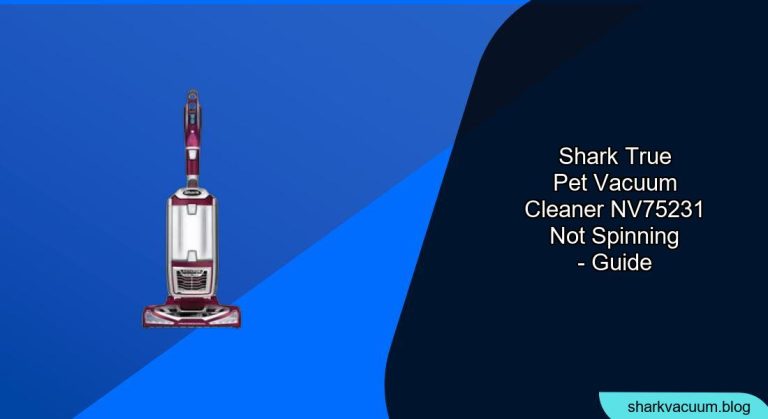
Is your Shark True Pet Vacuum (NV75231) brush roll refusing to spin, leaving you with less-than-stellar cleaning results? This is a common issue that many users face, but thankfully, it’s often easily resolved. This guide will walk you through the steps to diagnose and fix the problem, getting your vacuum back to its peak performance.
Many people rely on their Shark True Pet vacuum to tackle pet hair and everyday messes. When the brush roll stops spinning, it significantly impacts the vacuum’s ability to deep clean carpets and rugs. We’ll cover everything from basic checks to more advanced troubleshooting, empowering you to get your vacuum working again.
This article provides a comprehensive guide to getting your Shark True Pet vacuum’s brush roll spinning again. We’ll explore common causes, step-by-step solutions, and preventative measures to keep your vacuum running smoothly. So, let’s dive in and get your Shark vacuum back in action!
Identifying the Cause of the Problem

Before you start taking things apart, it’s important to identify the potential cause of the brush roll malfunction. Here are some common culprits:
- Blockages: Hair, string, and debris can easily get tangled around the brush roll, preventing it from spinning freely.
- Full Dust Cup: A full dust cup restricts airflow, which can affect the brush roll’s performance.
- Dirty Filters: Clogged filters can also reduce suction and impact the brush roll.
- Brush Roll Motor Issues: In some cases, the brush roll motor itself might be faulty.
- Belt Problems: The belt that connects the motor to the brush roll might be broken or stretched out.
Step-by-Step Troubleshooting
Here’s a systematic approach to troubleshooting your Shark True Pet vacuum’s brush roll:
1. Check the Dust Cup and Filters
- Dust Cup: Empty the dust cup completely. Even if it doesn’t look completely full, it could still be impacting suction.
- Filters: Locate and remove the pre-motor and post-motor filters. Wash them with water and allow them to dry completely (at least 24 hours) before reinstalling. Never operate the vacuum without dry filters.
2. Inspect the Brush Roll for Blockages
- Turn off and unplug the vacuum. Safety first!
- Locate the brush roll access panel. This is usually on the bottom of the vacuum head.
- Remove the access panel. You may need a screwdriver for this.
- Carefully remove any hair, string, or debris wrapped around the brush roll. Scissors or a seam ripper can be helpful for cutting through tangled hair.
3. Check the Brush Roll Motor
- With the brush roll removed, turn on the vacuum. Observe if the motor spindle (where the brush roll sits) is spinning.
- If the spindle isn’t spinning, there may be an issue with the motor itself. Contact Shark customer service for further assistance.
- If the spindle is spinning, the motor is likely functioning correctly.
4. Inspect the Belt
- Locate the belt. This is usually located near the brush roll motor.
- Check for signs of damage, such as cracks, breaks, or excessive stretching.
- If the belt is damaged, it will need to be replaced. You can purchase replacement belts online or from a vacuum repair shop.
5. Reset the Vacuum
- Some Shark vacuums have a reset button. Consult your owner’s manual to see if your model has one.
- If there’s no reset button, unplug the vacuum for 60 minutes. This can sometimes reset the motor and resolve the issue.
Replacing the Brush Roll Belt (If Necessary)
If you’ve determined that the brush roll belt is the problem, here’s how to replace it:
- Purchase a replacement belt. Make sure it’s the correct belt for your Shark True Pet NV75231 model.
- Remove the old belt.
- Install the new belt. Loop the new belt around the motor spindle and then around the brush roll.
- Reinstall the brush roll access panel.
Tools and Materials You Might Need
- Screwdriver (usually a Phillips head)
- Scissors or seam ripper
- Replacement brush roll belt (if necessary)
- Water for cleaning filters
- Towel for drying filters
Troubleshooting Guide
Here are some common problems and their solutions:
- Problem: Brush roll still not spinning after cleaning.
- Solution: Double-check for any remaining debris around the brush roll. Make sure the brush roll is properly seated in the vacuum head.
- Problem: Vacuum making a loud noise.
- Solution: This could indicate a worn-out brush roll bearing. Consider replacing the brush roll assembly.
- Problem: Vacuum loses suction.
- Solution: Check for blockages in the hose and wand. Ensure the dust cup and filters are clean.
- Problem: Brush roll spins intermittently.
- Solution: This could indicate a loose belt or a faulty motor. Inspect the belt and consider contacting Shark customer service.
- Problem: Vacuum shuts off automatically.
- Solution: This could be due to overheating. Allow the vacuum to cool down completely before using it again.
Pro Tips for Maintaining Your Shark Vacuum

- Regularly clean the brush roll to prevent hair and debris buildup.
- Wash the filters every 3 months, or more often if you have pets.
- Replace the filters every year to maintain optimal performance.
- Empty the dust cup after each use.
- Inspect the hose and wand for blockages regularly.
Alternatives and Variations
- Consider using a specialized pet hair brush for upholstery and other surfaces where the vacuum might not be as effective.
- If you’re still having trouble, consider taking your vacuum to a qualified repair shop.
FAQ Section
What does the brush roll do on a Shark vacuum, and why is it important?
The brush roll is a rotating brush located in the vacuum head that helps to agitate carpet fibers, loosening dirt and debris for more effective cleaning. A functioning brush roll is essential for deep cleaning carpets and removing embedded pet hair.
How often should I clean the brush roll on my Shark True Pet vacuum?
It’s recommended to clean the brush roll every 1-3 months, depending on how frequently you use your vacuum and the amount of pet hair or debris in your home. Regular cleaning prevents buildup and ensures optimal performance.
Can I use soap when washing the filters of my Shark vacuum?
No, it’s best to wash the filters with water only. Soap can leave a residue that can damage the filters or affect their performance. Ensure the filters are completely dry before reinstalling them.
How do I know when it’s time to replace the brush roll belt on my Shark vacuum?
Signs that your brush roll belt needs replacing include: visible cracks or damage, excessive stretching, the brush roll spinning weakly or intermittently, or a burning rubber smell during operation.
Is it possible to replace the brush roll motor myself, or should I contact a professional?
Replacing the brush roll motor can be a complex repair. If you’re not comfortable with electrical repairs, it’s best to contact Shark customer service or a qualified vacuum repair shop for assistance.
Where can I purchase replacement parts for my Shark True Pet vacuum?
Replacement parts, such as brush roll belts and filters, can be purchased online from the Shark website, Amazon, or from local vacuum repair shops. Always ensure you are buying the correct part for your specific vacuum model (NV75231).
Tips, Warnings, and Best Practices
- Always unplug the vacuum before performing any maintenance or repairs.
- Never operate the vacuum without dry filters.
- Be careful when using sharp objects to remove hair and debris from the brush roll.
- Do not use excessive force when removing or reinstalling parts.
- Consult your owner’s manual for specific instructions and safety information.
Conclusion
A non-spinning brush roll can be frustrating, but with a little troubleshooting, you can often get your Shark True Pet vacuum (NV75231) back in working order. By following the steps outlined in this guide, you can identify the cause of the problem, perform the necessary repairs, and maintain your vacuum for optimal performance. Regular maintenance, including cleaning the brush roll and filters, is key to preventing future issues and ensuring your Shark vacuum continues to deliver powerful cleaning for years to come. Remember to always prioritize safety by unplugging the vacuum before any maintenance.