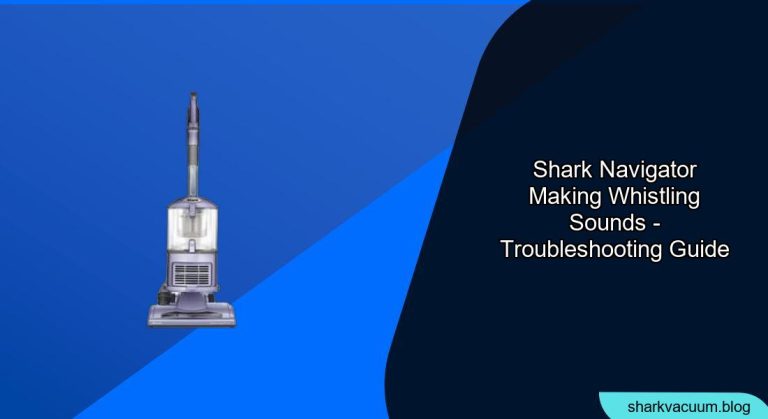
Is your Shark Navigator vacuum cleaner making an annoying whistling sound? This high-pitched noise often indicates a problem that needs attention. Don’t worry; it’s a common issue, and with a little troubleshooting, you can often fix it yourself. This guide will walk you through the potential causes of the whistling sound and provide step-by-step solutions to get your vacuum back in top working order.
Understanding Why Your Shark Navigator Is Whistling

A whistling sound in your Shark Navigator usually points to an airflow obstruction. This could be due to a blockage, a poorly sealed component, or a filter issue. Identifying the exact cause is the first step towards resolving the problem. The hissing sound can also be attributed to the air release valve which is designed to prevent the motor from overheating. When there is a blockage in the system, the valve opens up to release trapped air, causing the hissing sound.
Troubleshooting Steps to Stop the Whistle
Here’s a comprehensive guide to diagnosing and fixing the whistling sound in your Shark Navigator:
1. Check and Empty the Dust Cup
A full or overfilled dust cup is a common cause of whistling noises. When the dust cup is full, it restricts airflow, causing the motor to work harder and potentially overheat.
- Action: Empty the dust cup after each use or when it reaches the “max fill” line.
- Pro Tip: Gently tap the dust cup over a trash can to dislodge any stuck debris.
- Note: Some models require you to press a release button on top of the dust cup handle, tilt the dust cup away from the vacuum, and then lift to remove.
2. Inspect and Clean the Filters
Clogged filters restrict airflow, leading to whistling sounds and reduced suction. Shark Navigators typically have multiple filters that require regular maintenance.
- Action: Locate and remove the pre-motor filters (usually foam and felt filters) and the HEPA filter.
- Cleaning: Rinse the foam and felt filters with cold water every 3 months. Rinse the HEPA filter annually. Let all filters air dry completely for 24 hours before reinstalling.
- Location: Pre-motor filters are usually located near the dust cup, while the HEPA filter is often found on the side or front of the vacuum.
- Note: Ensure the filters are completely dry before reinstalling to prevent motor damage.
- Pro Tip: Clean the filters more frequently if you have pets or allergies.
- Replacement: Foam and felt filters should be replaced annually, while HEPA filters should be replaced every year.
3. Examine the Brush Head and Brush Roll
Hair, string, and debris can get tangled around the brush roll, impeding its rotation and causing strain on the motor, which can lead to whistling sounds.
- Action: Turn off and unplug the vacuum.
- Inspection: Remove the brush roll cover and carefully inspect the brush roll for tangled debris.
- Cleaning: Use scissors or a seam ripper to cut away hair and string. Remove any accumulated dirt and debris.
- Pro Tip: Some Shark Navigator models have a self-cleaning brush roll that minimizes hair tangles.
4. Check for Blockages in the Hose and Attachments
Obstructions in the hose, wand, or attachments can significantly restrict airflow and cause whistling.
- Action: Detach the hose and wand from the vacuum.
- Inspection: Visually inspect the hose and wand for any visible blockages.
- Removal: Use a broom handle or similar tool to gently dislodge any obstructions.
- Note: Be careful not to damage the hose while removing blockages.
- Pro Tip: Flexible hoses can be flushed with water to remove stubborn debris.
5. Inspect the Seals and Connections
Loose or damaged seals can allow air to escape, causing whistling sounds and reduced suction.
- Action: Check all connections between the hose, wand, dust cup, and motor housing.
- Inspection: Look for cracks, gaps, or damage to the seals.
- Resolution: Ensure all components are securely connected. Replace any damaged seals or parts.
- Note: Sometimes, simply reattaching components properly can resolve the issue.
6. Adjust the Height Settings
If the vacuum is set too high for the floor surface, it may not create an effective seal, leading to a higher-pitched sound and poor suction.
- Action: Adjust the height setting on the vacuum to match the floor type.
- Testing: Try different height settings to see if the whistling sound diminishes.
Practical Tips for Preventing Whistling Sounds
- Regular Maintenance: Consistently empty the dust cup, clean the filters, and check for blockages to prevent issues before they arise.
- Proper Storage: Store the vacuum in a clean, dry place to prevent dust and debris buildup.
- Gentle Use: Avoid running over large objects or excessive amounts of debris, which can cause blockages and damage the vacuum.
FAQ About Shark Navigator Whistling Sounds
Why does my Shark Navigator whistle when I use the hose?
A whistling sound specifically when using the hose often indicates a blockage within the hose itself or a poor connection. Disconnect the hose and inspect it for obstructions. Ensure it’s securely attached to the vacuum body and any attachments.
How often should I clean the filters on my Shark Navigator?
The foam and felt filters should be cleaned every 3 months, and the HEPA filter should be cleaned annually. More frequent cleaning may be necessary if you have pets or allergies.
What if I can’t find any blockages, but my Shark Navigator still whistles?
If you’ve checked for blockages and cleaned the filters, the issue might be a damaged seal or a faulty motor. Inspect the seals around the dust cup and hose connections. If the problem persists, contact Shark customer service or a qualified repair technician.
Can a worn-out brush roll cause a whistling sound?
Yes, a worn-out or damaged brush roll can cause the motor to work harder, leading to unusual noises, including whistling. Inspect the brush roll for wear and tear and replace it if necessary.
Is it safe to use my Shark Navigator if it’s making a whistling sound?
While it might be tempting to ignore the noise, continuing to use the vacuum with a whistling sound can cause further damage to the motor. It’s best to troubleshoot the issue and resolve it before using the vacuum again.
Where can I buy replacement parts for my Shark Navigator?
Replacement parts, such as filters, hoses, and brush rolls, can be purchased from various retailers, including:
- Shark’s official website
- Walmart
- eBay
- Amazon
- EZVacuum.com
- Think Crucial
Tips, Warnings, and Best Practices
- Safety First: Always unplug the vacuum before performing any maintenance or repairs.
- Avoid Overfilling: Empty the dust cup regularly to maintain optimal suction and prevent motor strain.
- Filter Drying: Ensure filters are completely dry before reinstalling to prevent motor damage and mold growth.
- Professional Help: If you’re unable to resolve the whistling sound or are uncomfortable performing repairs, contact Shark customer service or a qualified appliance repair technician.
Conclusion
A whistling Shark Navigator can be frustrating, but by following these troubleshooting steps, you can often identify and resolve the issue yourself. Regular maintenance, including emptying the dust cup, cleaning the filters, and checking for blockages, is key to preventing whistling sounds and keeping your vacuum running smoothly. Take action today to restore your Shark Navigator’s performance and enjoy a cleaner, quieter home. If the problem persists after trying these steps, consider contacting Shark customer support for further assistance or exploring professional repair options.