

Your kitchen floor tiles are cracked, the backsplash is outdated, or you’re renovating from scratch. Whatever the reason, learning how to install kitchen tile transforms both your space and your wallet—professional installation costs $8-$15 per square foot, while DIY saves thousands. But skip critical steps like substrate prep or mortar mixing, and you’ll face cracked tiles, lippage, or hollow spots within months. This guide cuts through the fluff to deliver what actually matters: precise measurements, substrate secrets, and pro techniques that prevent 90% of DIY tile disasters. You’ll learn exactly how to install kitchen tile that looks professional and lasts decades, even if you’ve never held a trowel.
Calculate Your Tile Needs to Avoid Wasted Money and Trips to the Store
Most DIYers underestimate tile quantity by 5-10%, leading to mismatched dye lots or project delays. Get this right the first time with a foolproof calculation method.
Measure Like a Pro (Not Guesswork)
Start by measuring each wall or floor section separately—don’t just multiply room length by width. For kitchen floors, break the area into rectangles (e.g., main floor, island base, peninsula). Multiply length by width for each section, then sum the totals. For backsplashes, measure height from countertop to bottom of cabinets, then multiply by wall width. Always add 15% extra for cuts and breakage—20% if using diagonal layouts or intricate patterns. When buying, insist on tiles from the same dye lot (check boxes for matching batch numbers) to prevent visible color variations.
Choose Tile That Survives Kitchen Realities
Kitchen floors endure spills, dropped knives, and heavy traffic—selecting wrong means replacing tiles in 2 years. For floors, only use tiles with PEI rating 3 or 4 (Porcelain Enamel Institute scale) and water absorption under 3% (ANSI A137.1 standard). Textured matte finishes prevent slips better than glossy options. For backsplashes, glossy porcelain cleans fastest but shows water spots; matte finishes hide splatters. Never use wall tile on floors—it lacks structural integrity. Natural stone requires specialized sealers; stick with porcelain for DIY-friendly durability.
Plan Your Layout to Eliminate Sliver Cuts and Awkward Patterns
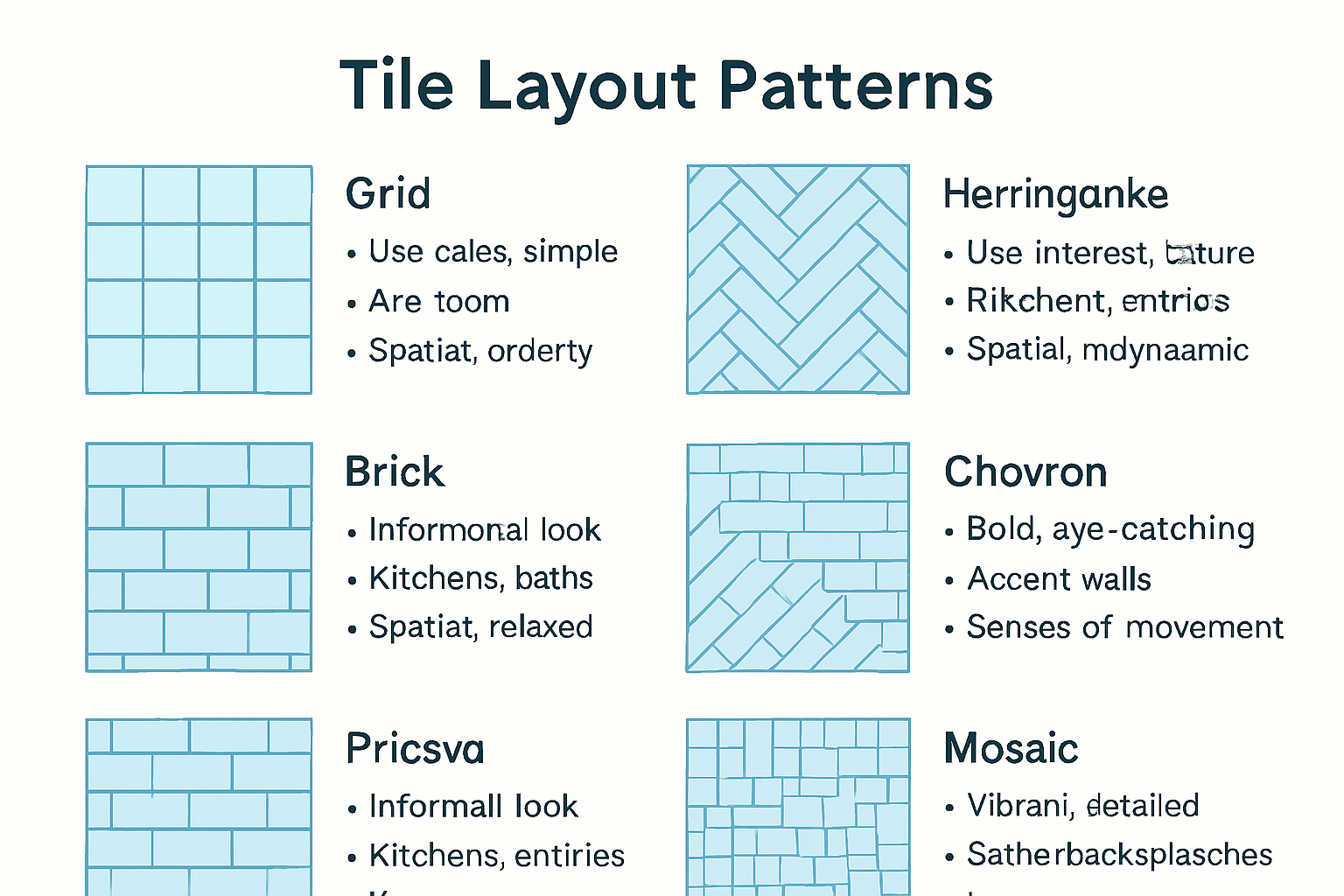
Skipping the dry layout causes “sliver cuts”—those embarrassing 1-inch tile pieces along walls that scream amateur job. Fix this before mixing mortar.
Find the True Center (Not What You Think)
Snap perpendicular chalk lines down the room’s length and width. The intersection is your visual center—but don’t start tiling here. Lay full tiles along both lines outward from the center. If the end cut against the wall is less than half a tile (e.g., 3″ for 12″ tile), shift your starting line by half that tile’s width. This pushes small cuts into hidden areas like behind the fridge or under cabinets. For backsplashes, start at eye level above the countertop, not the countertop edge, to avoid tiny cuts at the top.
Dry-Fit Every Tile Before Touching Mortar
Place all tiles with spacers on the floor for 24 hours. Walk through the space noting where cuts fall—adjust if cuts align with doorways or prominent sightlines. Pay special attention to corners: if a cut tile meets a full tile at 90 degrees, the seam will be obvious. Shift the pattern slightly to hide cuts in low-visibility zones. This prevents discovering layout flaws after mortar sets.
Prepare Your Substrate: Where 80% of Tile Projects Fail
Tiles fail because of bad prep—not bad tiles. Concrete, wood, or drywall each demand specific fixes.
Fix Wood Subfloors to Prevent Cracking
Existing wood subfloors must be at least 5/8″ thick with no flex. Place a 4-foot level on the floor; if gaps exceed 1/8″, add 1/4″ cement backer board (HardieBacker) screwed every 6″ with alkali-resistant tape over seams. Never tile directly over plywood—it flexes, cracking grout and tiles. For concrete slabs, etch with muriatic acid or mechanically abrade to remove sealers; water should absorb instantly, not bead up. Test with a moisture meter—readings above 4 lbs/1,000 sq. ft. require a vapor barrier.
Critical Flatness Checks Professionals Use
Place an 8-foot straightedge anywhere on the substrate. Gaps must not exceed 1/8″ over 10 feet (Tile Council of North America standard). Fill low spots with self-leveling cement, not thinset—mortar shrinks as it dries, creating voids. For walls, remove loose paint and prime porous drywall; in wet zones like backsplashes, replace drywall with cement board.
Mix and Apply Thinset Mortar Without Hollow Spots
Hollow sounds mean poor adhesion—a ticking time bomb for cracked tiles. Fix this at the mortar stage.
Get the Consistency and Technique Perfect
Mix polymer-modified thinset (for wood/concrete floors) to “peanut butter thickness” using a drill mixer. Let it slake (rest) 10 minutes, then remix—this activates bonding chemicals. Never add water after slaking; it weakens the mix. Work in 3’x3′ sections. Hold the notched trowel at 45 degrees, combing ridges in one direction. For tiles over 12×12″, back-butter the tile by skimming mortar on its back before setting—this prevents 99% of hollow spots. Press tiles straight down with a twist; sliding creates voids.
Choose the Right Trowel Size (Most DIYers Get This Wrong)
Using the wrong notch size causes lippage or insufficient coverage. For 12×12″ tile, use 1/4″ x 1/4″ square notch trowel. For 12×24″ or larger, switch to 1/2″ U-notch to ensure 85% mortar coverage. Test coverage: set a tile, then pull it up—if less than 80% of the back has mortar ridges, adjust trowel angle or notch size.
Set Tiles Without Lippage: The Leveling Secret

Lippage (uneven tile edges) causes tripping hazards and makes floors look cheap. Fix it during installation.
Place Tiles with Zero Height Differences
Start at your adjusted center point. Press each tile firmly into mortar with a rubber mallet and flat board—this “beats in” the tile for full contact. Immediately check adjacent tiles with a 2-foot level; maximum allowable lippage is 1/32″ (ANSI standard). For large-format tiles (12×24″+), use a tile leveling system: clip spacers between tiles, then tap wedges to force edges flush. Remove spacers after 20 minutes before mortar sets.
Space Grout Lines for Kitchen Durability
Use 1/8″ spacers minimum for kitchen floors—narrower joints trap dirt and crack easier. For backsplashes, 1/16″ works but requires a leveling system. Never reuse spacers; mortar hardens in crevices, causing inconsistent spacing.
Cut Tiles Safely for Outlets, Pipes, and Corners
Rushed cuts cause shattered tiles and jagged edges. Master these techniques.
Wet Saw vs. Manual Cutter: When to Use Each
For straight cuts on porcelain, a manual score-and-snap cutter works. But for L-shapes, outlets, or pipes, rent a wet saw—it’s non-negotiable for clean cuts. Always wear a respirator and goggles; silica dust from cutting causes lung disease. For pipes, drill a starter hole with a diamond core bit, then cut outward. Mark cuts with a glass pencil—it won’t wash off during cutting.
Backsplash Outlet Cutouts Without Cracks
Turn off power at the breaker. Place the outlet cover on the tile, trace its shape, then drill 1/4″ holes at each corner. Connect holes with a wet saw cut. Test-fit before setting; gaps over 1/8″ require re-cutting.
Grout and Seal for a Stain-Proof, Long-Lasting Finish
Grout fails in kitchens when rushed. Do this right to avoid re-grouting in 6 months.
Mix and Apply Grout to Resist Kitchen Stains
Wait full 24 hours after tiling—grouting too soon cracks tiles. Mix sanded grout (for joints 1/8″+) to “stiff peanut butter” thickness. Force grout diagonally into joints with a float, then wipe excess at 45 degrees after 15 minutes. Buff haze off with a microfiber cloth after 2 hours—no swirling motions that pull grout out. Critical: Seal grout 72 hours later with penetrating sealer; unsealed grout absorbs wine, oil, and coffee stains permanently.
Cure Time That Prevents Disasters
Avoid walking on floors for 48 hours. Never place appliances or heavy objects for 7 days—mortar needs full cure time. Skip this, and tiles shift, creating gaps where water seeps in.
Final Note: Installing kitchen tile saves $2,000+ but demands precision. Master substrate prep, mortar mixing, and grout sealing—the trifecta that separates DIY disasters from professional results. Measure twice, dry-fit always, and never rush curing times. Your reward? A kitchen floor that withstands daily chaos for 20+ years. For complex projects like heated floors or natural stone, consult a pro—the learning curve isn’t worth cracked tiles. Now grab your trowel: your flawless kitchen transformation starts today.


