
Your kitchen floor faces constant threats—from raw meat spills to sticky juice accidents—that demand serious disinfection. When standard mopping leaves you wondering how to clean kitchen floor with bleach safely, you need precise, science-backed methods. Bleach’s powerful sodium hypochlorite formula destroys 99.9% of bacteria like E. coli and norovirus, but misuse risks toxic fumes, permanent floor damage, or skin burns. Crucially, bleach sanitizes only pre-cleaned surfaces—it won’t cut through grease or grime. This guide reveals exactly when and how to use bleach without harming your floor or health, plus safer daily alternatives. You’ll learn critical surface tests, precise dilution ratios, and why skipping the dwell time renders bleach useless.
Critical Safety Steps Before Using Bleach on Kitchen Floors
Never grab bleach without these non-negotiable precautions. Mixing it with ammonia (found in many glass cleaners) or acids like vinegar creates lethal chlorine gas—a chemical weapon that causes choking, lung fluid buildup, and chemical pneumonia. Even “fresh-scented” cleaners often contain hidden acids. Immediately stop cleaning if you smell a strong chlorine odor—this indicates dangerous gas formation, not normal use. Work only in well-ventilated areas with windows open and fans running outward. Always wear nitrile gloves and goggles; bleach causes chemical burns on skin and irreversible eye damage. Store diluted solutions away from children and pets in labeled containers—never reuse food bottles. Remember: Bleach is strictly for spot sanitization after biohazards (vomit, blood), not routine cleaning.
Test Your Floor’s Bleach Tolerance in 24 Hours
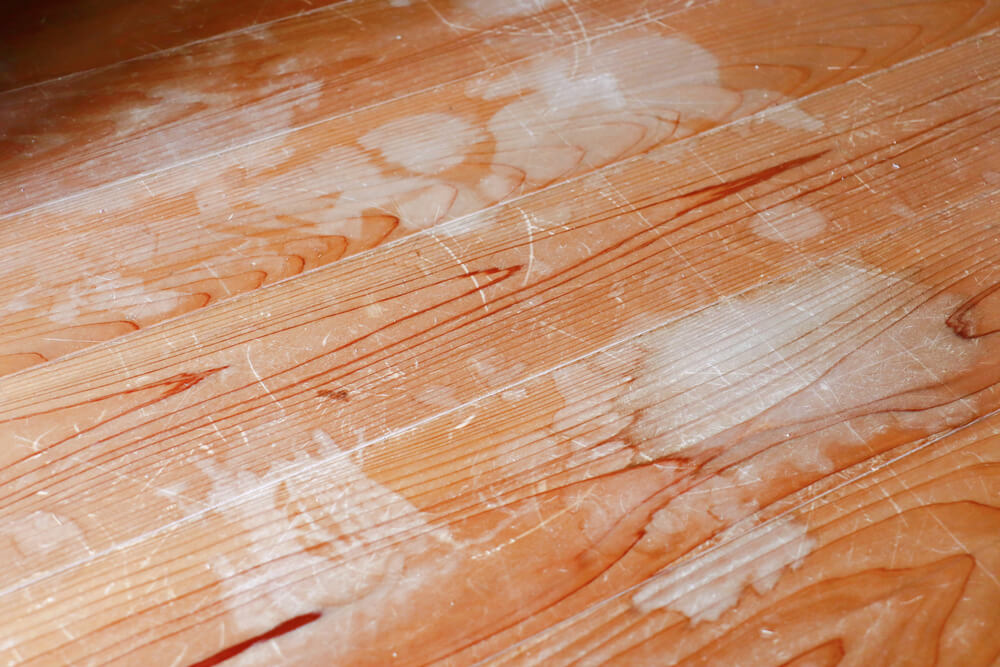
Applying bleach without testing guarantees disaster. This 24-hour test prevents irreversible damage—skip it, and you risk etched marble, yellowed vinyl, or crumbling grout. In a hidden spot (behind the fridge or inside a cabinet), apply your diluted bleach solution with a cotton swab. Wait 24–48 hours, then check for:
– Discoloration (blotchy white grout, faded tiles)
– Texture changes (dull, “frosted” stone or soft, sticky vinyl)
– Delamination (peeling layers on laminate or engineered wood)
Safe Surfaces for Diluted Bleach (Post-Test)
- ✅ Glazed Ceramic/Porcelain Tile: Generally safe only if grout is professionally sealed. Unsealed grout turns chalky white.
- ⚠️ Quartz/Granite: Use only if manufacturer-approved and sealed. Acidic bleach etches unsealed stone.
- ❌ Vinyl, Laminate, Engineered Wood: Bleach strips sealants, causing yellowing, brittleness, and delamination.
- ❌ Sealed Hardwood: Breaks down polyurethane finish, leading to permanent water damage.
- ❌ Marble, Travertine, Unsealed Grout: Bleach’s alkalinity dissolves calcium carbonate, creating permanent etch marks.
Remove All Grease and Grime Before Bleach Application
Bleach becomes useless on dirty floors—it’s deactivated by organic matter like food residue or grease. Skipping this step wastes bleach and creates toxic byproducts. Follow this sequence:
- Sweep/vacuum thoroughly: Remove crumbs, pet hair, and debris. Vacuum crevices where dirt hides.
- Degrease with hot water + dish soap: Mix 1 tbsp Dawn dish soap per gallon of hot water. Mop vigorously, focusing on greasy zones near the stove. Rinse the mop head every 200 sq. ft.
- Rinse with clean water: Use a second bucket of plain water to remove soapy residue. The floor must look completely clean—no streaks or film—before proceeding.
Pro Tip: For stubborn grease, sprinkle baking soda first, then scrub with a stiff brush. Never use vinegar—residual acid reacts with bleach later.
Correct Bleach Dilution and Mopping Technique for Disinfection
Using full-strength bleach or wrong ratios causes damage. Heat and improper mixing destroy bleach’s efficacy—follow these exact steps:
- Prepare solution: In a dedicated bucket (never used for other cleaners), pour 1 gallon cool water. Add ½ cup (4 oz) regular 5-6% bleach. Always add bleach to water—not vice versa—to prevent splashes. Stir with plastic spoon.
- Mop strategically: Start farthest from the exit. Dip microfiber mop into solution, wring until damp (not dripping). Apply in slow, overlapping strokes.
- Enforce 10-minute dwell time: Let solution sit wet for full 10 minutes—this is when pathogens die. Do not walk on or rinse yet. Ventilate the room and leave immediately.
- Rinse immediately: Refill bucket with clean cool water. Mop entire floor again to remove residue. Sticky bleach film attracts dirt fast.
- Air-dry completely: Keep windows open until floor is dry (1–2 hours). Lingering chlorine smell means insufficient rinsing.
Warning: Never use hot water—it degrades sodium hypochlorite in seconds. And never apply bleach near metal appliances—corrosion pits metal feet within hours.
Why Rinsing After Bleach is Non-Negotiable for Floors
Residue left behind isn’t just sticky—it actively damages floors. Bleach residue:
– Attracts dirt like a magnet, making floors look dirty faster
– Degrades sealants on tile and stone with repeated exposure
– Causes slip hazards when combined with tracked-in oils
– Yellow vinyl over time due to oxidation
If the floor still smells strongly of chlorine after drying, you missed a spot. Rewet the area with clean water, mop, and dry again. For stone or luxury vinyl tile (LVT), one missed rinse can cause $500+ refinishing costs.
10-Step Bleach Kitchen Floor Cleaning Safety Checklist
- [ ] Test solution on hidden floor area 48 hours prior
- [ ] Confirm no ammonia/vinegar used in kitchen for 7 days
- [ ] Ventilate room with cross-breeze (open 2+ windows)
- [ ] Wear nitrile gloves + eye protection
- [ ] Pre-clean floor with degreaser until spotless
- [ ] Dilute ½ cup bleach per gallon cool water
- [ ] Use dedicated bleach-only bucket/mop
- [ ] Dwell 10 minutes—no shortcuts!
- [ ] Rinse immediately with clean water
- [ ] Store leftover solution ≤24 hours (it degrades fast)
Effective Non-Bleach Cleaners for Daily Kitchen Floor Maintenance
Bleach is overkill 95% of the time. For routine cleaning, these options work faster and safer:
– Daily grease cutting: 2 drops dish soap + 1 gallon hot water. Mop, then rinse.
– Disinfection without damage: EPA-registered quaternary ammonium sprays (e.g., Lysol Clean & Fresh). Spray, wait 10 minutes, wipe—no rinsing needed on sealed floors.
– Grout revival: Baking soda paste + hydrogen peroxide. Scrub with old toothbrush, rinse.
– Hard water stains: 50/50 water/vinegar only on ceramic/porcelain (never stone).
Expert Insight: Flooring installers report 70% of “ruined floors” they repair stem from unnecessary bleach use. A pH-neutral cleaner like Bona Hardwood Floor Cleaner lifts daily grime without risking your floor’s integrity.
Top 5 Bleach Floor Cleaning Errors That Damage Floors
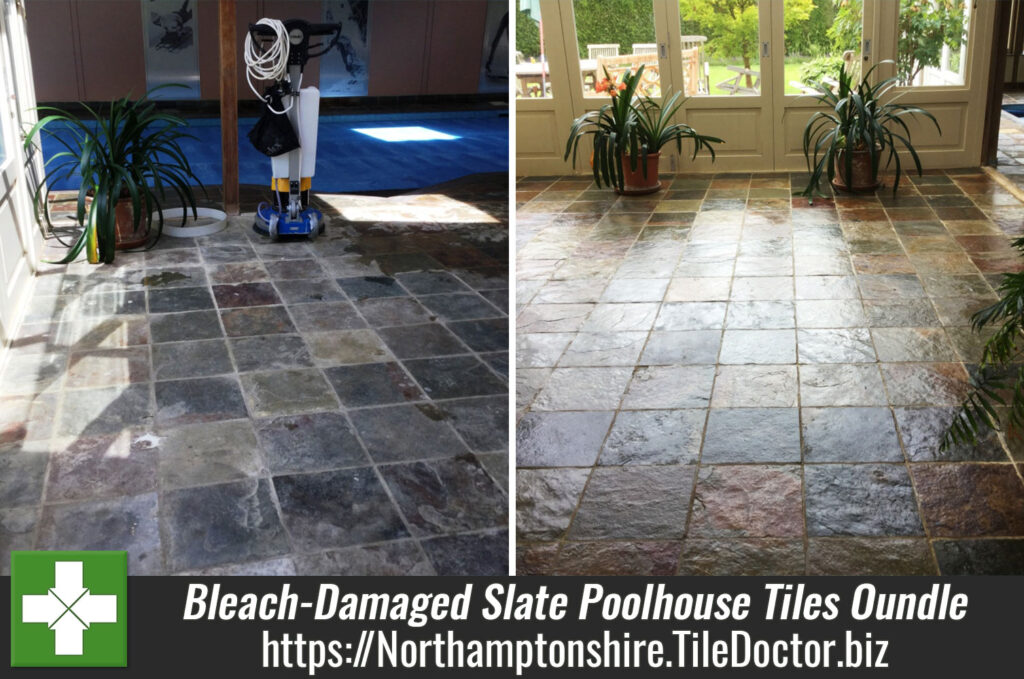
Mistake #1: Skipping the pre-clean
Bleach bonds to grease, creating orange-brown stains that won’t rinse off. Fix: Always degrease first.
Mistake #2: Using on “stone-look” vinyl
Printed patterns fade permanently. Fix: Test first—most LVT isn’t bleach-safe.
Mistake #3: Rinsing too early
5-minute dwell time kills only 70% of bacteria. Fix: Set timer for full 10 minutes.
Mistake #4: Reusing “bleach buckets” for other cleaners
Traces of acid in the bucket create chlorine gas. Fix: Label buckets “BLEACH ONLY.”
Mistake #5: Ignoring dwell time on grout
Unsealed grout absorbs bleach, crumbling within months. Fix: Seal grout yearly with penetrating sealer.
Signs You Need a Pro for Kitchen Floor Disinfection
Call a specialist if:
– You have natural stone (marble, limestone) or unsealed grout—bleach requires expert sealing first
– There’s mold growth under tiles—bleach can’t kill embedded mycelium
– You mixed chemicals and inhaled fumes—seek medical help immediately
– Floor shows white streaks or etching post-cleaning—requires professional refinishing
For most homes, bleach’s risks outweigh benefits. Reserve it for true biohazards like norovirus outbreaks, and stick to pH-neutral cleaners for weekly maintenance. Your floor’s longevity—and your lungs—will thank you.
Final Takeaway: How to clean kitchen floor with bleach safely hinges on three rules: Test first, clean thoroughly before applying, and rinse aggressively. When in doubt, skip bleach entirely—modern disinfectants sanitize without the hazards. For daily upkeep, a simple soap-and-water mop keeps kitchens hygienic and floors pristine for years.


