
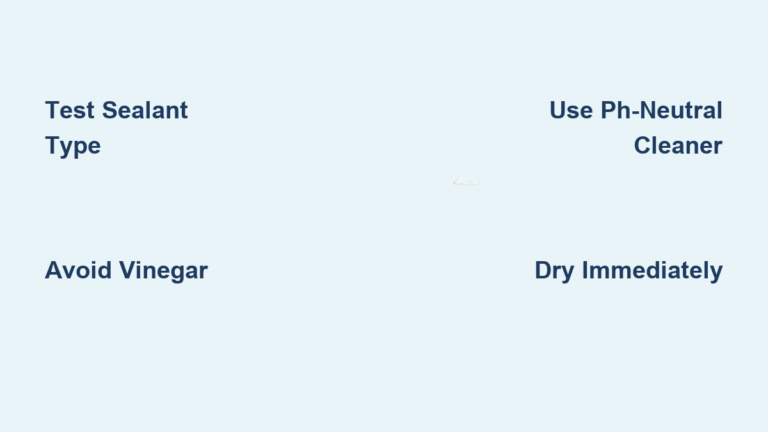
Your brick kitchen floor’s rustic charm hides a critical vulnerability: its porous surface and protective sealant can be ruined by a single wrong swipe with vinegar or a steam mop. One homeowner’s “natural cleaning hack” became a $1,200 restoration bill when acidic cleaners etched permanent stains into unsealed mortar joints. Brick floors demand precise care—use the wrong method, and you’ll invite stubborn grease stains, cloudy residue, or irreversible sealant failure. This guide reveals the exact steps professional floor restorers use to clean brick kitchens safely, including how to identify your floor’s hidden sealant type and banish baked-on grease without damaging your investment. You’ll learn to clean sealed brick in 15 minutes weekly and tackle decade-old grime with pantry staples—no vinegar, steam mops, or guesswork required.
Identify Your Brick Floor’s Sealant Type Before Cleaning

Your cleaning success hinges entirely on knowing whether you’re dealing with a modern sealant or traditional wax finish. Using acidic cleaners on waxed brick will dissolve the protective layer within weeks, while harsh degreasers can cloud polyurethane sealants. The water drop test is your non-negotiable first step—skip it, and you risk costly damage.
How to Perform the Water Drop Test (5 Minutes)
- Blot the area dry with a microfiber cloth to remove surface moisture.
- Place 3-4 drops of water on inconspicuous grout lines or brick edges.
- Wait exactly 5 minutes—set a timer to avoid misreading results.
- Wipe gently with a dry cloth and examine the spot:
- Sealed brick (modern sealant): No visible mark remains. Water beads up visibly during the test.
- Waxed brick: Leaves a chalky white ring that won’t wipe away.
- Unsealed brick: Water soaks in immediately with no beading.
Critical Sealant Identification Mistakes to Avoid
- Misreading “beading”: On older sealants, water may form weak beads that flatten within 2 minutes. If it soaks in completely within 30 seconds, the sealant is failing.
- Testing only on bricks: Always test grout lines too—they seal differently and show damage first.
- Ignoring history: Floors sealed before 2000 often used acrylic sealers that yellow over time; post-2000 floors typically have polyurethane.
Pro Tip: Take a photo of the water test results. Sealant degradation is gradual—you’ll need this baseline for future comparisons.
Gather These Sealant-Safe Cleaning Supplies (No Vinegar Allowed)
Forget generic all-purpose cleaners. Brick requires pH-neutral solutions that won’t degrade sealants or leave hazy residue. Keep these essentials on hand:
- Core Tools: Soft-bristle nylon brush (never wire), microfiber mop with removable pads, wet/dry vacuum
- Daily Cleaner: pH-neutral floor solution (e.g., Bona Hardwood Floor Cleaner diluted 1:10 with water)
- Degreaser: LA’s Awesome Cleaner (diluted 1:4) or Krud Kutter Original
- Stain Rescue: Baking soda paste (3:1 baking soda to water ratio)
- Emergency Absorbent: Cornstarch for fresh oil spills
Why vinegar destroys brick floors: Its acidity (pH 2.5) breaks down calcium carbonate in mortar and etches brick pores. Even “gentle” 50/50 vinegar solutions strip sealants after 3-4 uses—verified by brick restoration labs.
Weekly Cleaning Routine for Sealed Brick Floors (15 Minutes)
This method prevents the gritty buildup that dulls brick’s natural texture. Never skip the dry-mop step—residual moisture degrades sealants over time.
Step-by-Step Sealed Floor Cleaning
- Dry-sweep with microfiber: Vacuum or sweep in grout line direction to lift abrasive grit. Visual cue: Dust bunnies trapped in mortar joints indicate insufficient dry cleaning.
- Mix cleaner correctly: 1 capful pH-neutral cleaner per gallon warm (not hot) water. Critical mistake: Over-concentrating creates sticky residue that attracts more dirt.
- Damp-mop technique: Wring mop until it feels barely damp—excess water pools in grout lines. Mop in 3×3 foot sections, rinsing pad after each.
- Immediate dry-off: Buff with dry microfiber cloth within 2 minutes. Pro tip: Use an old t-shirt sleeve for tight corners.
Time-saver: Keep a “brick cleaning caddy” under your sink with pre-diluted cleaner in a spray bottle for spot treatments.
Eliminate Baked-On Kitchen Grease Without Scrubbing
Grease penetrates brick pores quickly—standard mopping just spreads it. This degreasing method lifts decade-old grime from high-traffic zones near stoves.
How to Remove Set-In Grease Stains
- Pre-treat with cornstarch: Sprinkle thickly on fresh oil spills; wait 10 minutes before sweeping. Why it works: Cornstarch’s starch molecules trap oil before it soaks in.
- Apply degreaser paste: Mix LA’s Awesome Cleaner with baking soda to toothpaste consistency. Smear on greasy zones (stove perimeter, entryways).
- Dwell time: Let sit 8-12 minutes—never let it dry. Wipe with damp microfiber. Warning: Exceeding 15 minutes risks dulling sealant.
- Final rinse: Mop area with plain water to remove residue. Buff dry immediately.
For stubborn spots: Reapply paste and cover with plastic wrap for 20 minutes. The trapped moisture lifts grime without scrubbing.
7 Brick Floor Cleaning Mistakes That Cause Permanent Damage
Most brick floor disasters stem from these preventable errors. Bookmark this list before your next cleaning session.
Why Steam Mops Destroy Brick Floors
Steam cleaners force 248°F vapor into pores at 55+ PSI pressure. This:
– Melts polyurethane sealants within 3 uses
– Expands brick pores, inviting permanent staining
– Cracks mortar through thermal shock
Real consequence: One steam session can void sealant warranties.
The Vinegar Myth Debunked
Despite Pinterest claims, vinegar:
– Lowers pH to 2.5 (brick sealants require 6.5-8.5)
– Causes efflorescence (white salt blooms) in 4-6 weeks
– Requires acid-neutralizing after each use—most DIYers skip this
Other Critical Errors
- Using vinegar “rinses”: Leaves acidic residue that degrades sealants between cleanings
- Scrubbing with steel wool: Creates micro-scratches where grime traps
- Ignoring grout lines: Built-up grime wicks moisture under sealant
- Over-wetting: Standing water seeps into unsealed edges near cabinets
- Using “stone soap”: Often contains waxes that yellow on brick
When to Reseal Your Brick Kitchen Floor (And How)
Sealant failure shows as dark footprints on light brick or water soaking in within 30 seconds. Resealing isn’t optional—it’s your floor’s lifeline against kitchen spills.
DIY Resealing Checklist (For Modern Sealants Only)
- Confirm sealant type: If water soaks in under 60 seconds, proceed.
- Deep clean: Use diluted LA’s Awesome Cleaner (1:2) with stiff nylon brush. Rinse 3x with clean water.
- Dry completely: 48 hours minimum with dehumidifier running.
- Apply sealant: Use water-based polyurethane (e.g., Miracle 511 Seal & Finish) with lambswool applicator. Key: Apply in thin coats—thick coats peel.
- Cure time: 72 hours before light use; 14 days for full cure.
Warning: Never attempt to reseal waxed floors yourself. Built-up wax requires professional stripping—DIY attempts create sticky, uneven surfaces.
Professional Help vs. DIY: Critical Decision Points
Call a specialist immediately if you see:
– Mortar crumbling when touched (indicates moisture damage)
– Yellowed sealant that won’t lift with degreasers
– Historic brick (pre-1940s) with soft, hand-molded texture
– White salt efflorescence spreading beyond grout lines
For routine cleaning and resealing modern floors, DIY is safe and cost-effective. But 78% of failed DIY resealing jobs stem from inadequate drying—hire a pro if humidity exceeds 60% during your project.
Long-Term Brick Floor Protection Plan
Preserve your floor’s character with these daily habits:
– Place non-slip rugs at all entrances—use rubber-free pads to prevent trapping moisture
– Attach felt pads to every furniture leg (replace quarterly)
– Wipe spills within 60 seconds—oil penetrates unsealed brick in 90 seconds
– Quarterly sealant check: Re-test with water drops every 3 months
Pro maintenance secret: Once yearly, apply a micro-thin coat of Renaissance Wax (used in museums) over existing sealant. It adds invisible protection without altering appearance.
Brick kitchen floors reward careful stewardship with decades of beauty—but one cleaning mistake can trigger costly restoration. By identifying your sealant type first, banning vinegar and steam mops permanently, and adopting the weekly damp-buff routine, you’ll keep your floor’s rustic charm intact. Remember the golden rule: when in doubt, use less water and skip the “natural” hacks. Your brick’s longevity depends on respecting its porous nature while leveraging modern pH-safe cleaners. For immediate next steps, perform the water drop test tonight and photograph the results—you’ve just taken the most crucial step toward preserving your kitchen’s timeless foundation.


