
That sleek grey kitchen you loved in the showroom might now feel more like a sterile lab than a welcoming heart of your home. When cool undertones dominate countertops, cabinets, and walls, even the sunniest morning coffee can feel chilly. You’re not alone—nearly 70% of homeowners who choose grey regret its coldness within a year. The secret isn’t repainting everything, but strategically layering warmth where it matters most. By focusing on light, texture, and intentional color pops, you’ll turn your grey kitchen from stark to soul-soothing in under a weekend. This guide reveals exactly how to add warmth to a grey kitchen using proven, budget-friendly tweaks—not costly renovations.
Why Your Grey Kitchen Feels Cold (And How Warm Lighting Fixes It Instantly)

Cool-toned grey absorbs light instead of reflecting it, creating shadows that amplify coldness. Your lighting choices either fight this or surrender to it. Most builders install harsh 4000K+ “daylight” bulbs that turn grey surfaces clinical and unwelcoming. The fastest fix? Swap every bulb to 2700K-3000K warm white. This single change mimics golden-hour sunlight, instantly softening grey’s sharp edges. Don’t stop there—standardize temperatures across all fixtures. Mixing a warm pendant over your island with cool under-cabinet lights creates visual chaos that strains your eyes. For evening ambiance, install dimmer switches on overheads; lowering lights to 50% intensity creates café-like warmth perfect for dinner parties. Finally, replace stainless steel pendants with woven rattan fixtures or unlacquered brass finishes—their textured surfaces diffuse light gently, eliminating the “operating room” glare that makes grey kitchens feel unwelcoming.
How to Test Your Lighting Temperature in 60 Seconds
- Stand in your kitchen at night with all lights on
- Hold a white sheet of paper under each fixture
- If the paper looks blue-ish, you need warmer bulbs (2700K)
- If it looks yellow, you’re in the warmth zone (3000K)
- Critical mistake: Never mix bulb temperatures—replace all at once
Paint This One Wall Terracotta to Neutralize Grey’s Chill

Stark white walls beside grey cabinets create a high-contrast, hospital-like effect. Your goal isn’t to eliminate grey but to counterbalance its coolness with warm companions. Start by repainting walls in greige (grey-beige) shades like Sherwin-Williams Agreeable Gray—this adds subtle warmth without competing with cabinets. For maximum impact, paint just one focal wall in terracotta or deep sage. A spice-rack wall behind open shelves in Benjamin Moore’s “Canyon Dusk” creates a cozy backdrop for wooden bowls and copper pots. Avoid cool blues or pure whites—they’ll make your grey cabinets feel colder. If painting isn’t an option, swap cool-toned cabinet hardware for warm brass or matte black pulls. This $50 change tricks the eye into perceiving warmth through contrast.
Two-Tone Cabinet Hack for Instant Depth
- Lower cabinets: Paint forest green (e.g., Sherwin-Williams Rookwood Dark Green) for grounding warmth
- Upper cabinets: Use warm white (Benjamin Moore White Dove) to lift the space
- Pro tip: Add under-cabinet lighting with 2700K LED strips—warm light bouncing off uppers makes the whole kitchen glow
Wood Countertops: Grey Kitchens’ Secret Warmth Weapon
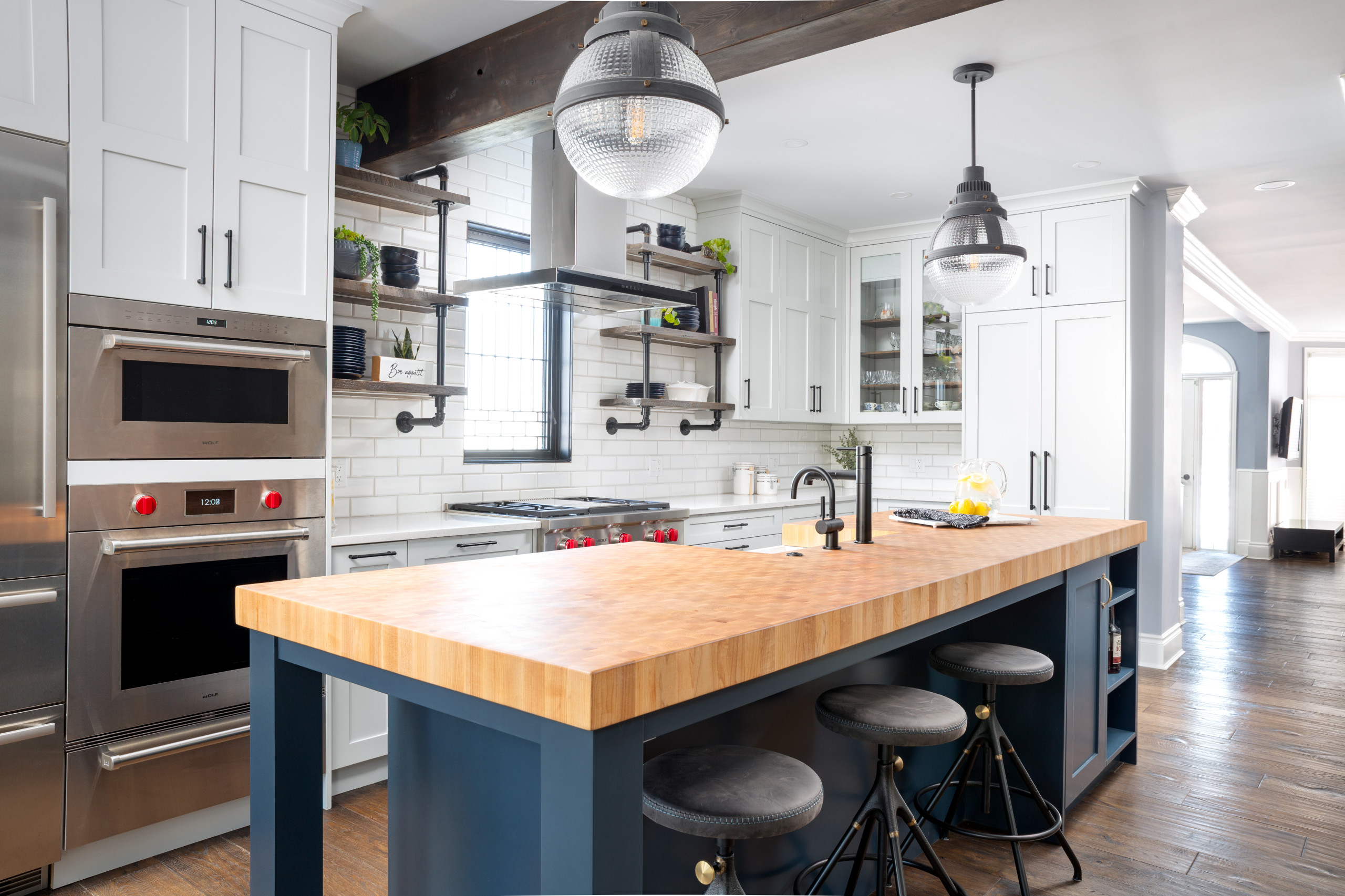
Grey’s smooth, cool surfaces lack the organic variation that signals “warmth” to our brains. Introduce wood textures to break up monotonous grey expanses—they add visual vibration that feels alive. Butcher block countertops are the heavyweight champion here. A walnut-stained end-grain island becomes an instant warmth anchor, especially when paired with warm-toned bar stools in oak or rattan. No countertop budget? Place a wooden cutting board permanently on the counter near your coffee station—it catches morning light and adds tactile warmth. For storage, swap wire baskets for seagrass or rattan bins holding onions or potatoes. Their irregular textures create micro-shadows that mimic candlelight, softening grey’s flatness.
Why Natural Fibers Beat Cool Surfaces Every Time
| Material | Effect on Grey Kitchen | Cost | Time Required |
|---|---|---|---|
| Jute rug | Absorbs light, adds earthy texture | $80 | 10 min |
| Marble cheese board | Reflects warm light, feels luxurious | $45 | N/A |
| Woven placemats | Creates layered warmth under dishes | $25 | 2 min |
| Avoid: Glass canisters or stainless steel—they amplify coldness |
Warm-Toned Accessories That Trick the Eye in Under $100
Accessories are your final, most personal warmth layer—they signal “lived-in” comfort. Start with greenery: A fiddle leaf fig in an unglazed terracotta pot adds living warmth that grey can’t replicate. Place trailing pothos on open shelves—their vibrant green counters grey’s coolness through complementary color theory. Next, swap cool-toned kitchen tools. Replace stainless steel canisters with matte ceramic in oat or rust, and display a hammered copper tea kettle on the stovetop. Textiles are non-negotiable—a linen runner in burnt orange under wooden bowls adds pattern and warmth without clutter. For instant impact, layer a small vintage rug with ochre and terracotta patterns under your breakfast nook chairs. The pile depth traps heat, making the space feel physically warmer.
The 3-Second Warmth Check Before Styling
Hold your hand over a surface:
✅ Warm indicator: Wood grain visible, matte finish, earthy color
❌ Cold indicator: Reflective surface, cool undertones, smooth plastic
Fix cold spots with woven coasters or a wooden fruit bowl
Why Your Backsplash Kills Warmth (And What to Do Instead)

Most grey kitchens feature cool subway tile that extends the coldness vertically. Replace it with textured, warm-toned tile to create a warmth barrier between cabinets and walls. Zellige tile in “Desert Clay” from Clé Tile has irregular surfaces that catch light warmly, while handmade terracotta adds artisanal depth. Can’t re-tile? Install a wooden shelf above counters—it creates a horizontal warmth line that breaks up grey’s dominance. Fill it with cookbooks and a small potted herb garden. For faucet warmth, swap chrome finishes for unlacquered brass—it develops a patina over time, adding organic warmth that cool metals never achieve.
Final Note: Transforming your grey kitchen requires no demolition—just strategic warmth injections. Start tonight by replacing all bulbs with 2700K warm white LEDs (a $20 fix that takes 10 minutes). By tomorrow morning, your coffee will taste warmer in that golden-lit space. Layer in one wood element like a butcher block cart next weekend, then add terracotta accessories the following week. Within a month, you’ll have a kitchen where grey feels intentional—not icy. Remember: warmth isn’t about erasing grey, but making it work for you. When friends linger over dinner, they won’t see the grey—they’ll feel the glow.


