
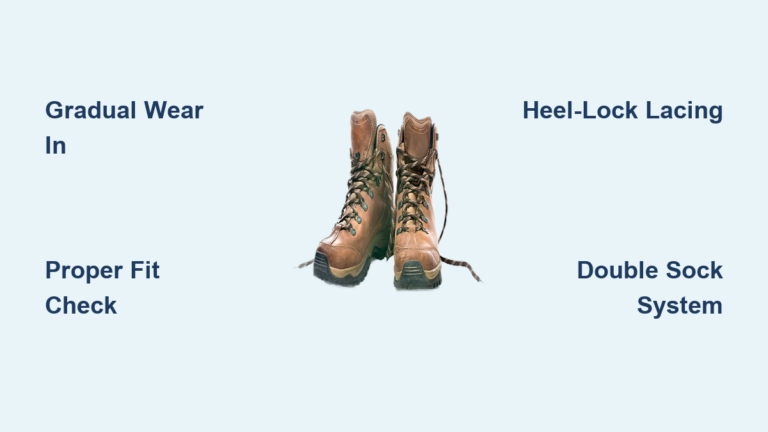
Nothing sabotages a dream hiking trip faster than the searing pain of a fresh blister tearing into your heel. That stiff new pair of hiking boots sitting by your door isn’t just footwear—it’s the difference between summiting that mountain trail and limping back to the trailhead. Knowing the best way to break in hiking boots transforms rigid, unforgiving footwear into a seamless extension of your feet. This isn’t about shortcuts or gimmicks; it’s a strategic process that prevents debilitating blisters while molding boots to your unique foot shape. By the end of this guide, you’ll master proven techniques to soften even the stiffest leather boots safely and efficiently—so your next adventure starts with confidence, not corns.
Target Specific Materials: Leather Boots Demand Different Tactics Than Synthetics

Your break-in strategy hinges entirely on what your boots are made of. Full-grain leather boots arrive rigid and unyielding, requiring deliberate softening to develop that custom, flexible fit. These demand patience—forcing them too quickly risks permanent damage. Synthetic boots, while more pliable out of the box, still need molding to your foot’s pressure points and gait. Skipping material-specific steps guarantees blisters. For leather models, expect a 2–3 week process; synthetics often soften in 7–10 days. Never assume one-size-fits-all methods work—your boot’s composition dictates every move.
Why Leather Boots Need Gradual Conditioning
Leather’s natural fibers must flex incrementally to avoid cracking or warping. Rushing this causes structural failure, not comfort. Start conditioning before wear: Apply a pea-sized amount of Leather Honey or Nikwax conditioner to clean, dry leather using circular motions. Focus on stiff zones like the toe box and ankle collar. Wipe off excess immediately—thick layers trap moisture and degrade stitching. This pre-softening step jumpstarts flexibility without compromising waterproof membranes.
Synthetic Boot Flexing Techniques That Actually Work
Synthetics resist deep conditioning but need repeated flexing to conform. Wear them indoors for 20-minute intervals, deliberately bending the forefoot with each step. Target stiff seams by pressing thumbs into pressure points while the boot is on your foot. Unlike leather, synthetics won’t absorb conditioners—skip oils entirely. Instead, use a hairdryer on low heat for 30 seconds on problem areas only while wearing the boots, then walk immediately to lock in the new shape. Never exceed 100°F—high heat melts adhesives.
Secure Perfect Fit Before Any Break-In Begins

A flawed fit sabotages even the best break-in method. If your boots pinch, gap, or slide during initial try-ons, no amount of wear will fix it. Visit a specialty store for professional fitting in the afternoon (when feet swell 5–10%). Demand to test boots with your intended hiking socks. A properly fitted boot feels snug across the instep with zero heel lift—your heel should move less than 1/4 inch during walking tests. Crucially, stand on a slope board: Your toes must stay clear of the front by a full thumbnail’s width (about 1/2 inch) when leaning forward. If pressure builds instantly on any bony prominence, walk away—no break-in process overcomes fundamental fit errors.
Critical Fit Checks You Must Perform
- Heel lock test: March briskly downhill on an incline. Visible heel slippage means blisters are inevitable.
- Toe splay assessment: Press toes against the front wall. Your longest toe should have wiggle room without touching.
- Instep pressure scan: Tightness over the arch or ball of foot? Adjust lacing now—it won’t improve.
Execute the Progressive Wear-In Method: Step-by-Step Break-In Schedule
This is the only scientifically backed approach to mold boots safely. Deviating causes blisters. Track wear time religiously—25 hours total is the universal threshold for full break-in.
Day 1–3: Controlled Indoor Wear Sessions
Wear boots exclusively indoors with your hiking sock system for 60–90 minutes daily. Do chores like vacuuming or folding laundry—activities requiring natural foot flexion. Stop immediately if hot spots develop. After each session, remove insoles to air out moisture. This phase acclimates leather/synthetics to your foot’s heat and movement without trail hazards.
Day 4–7: Short Outdoor Walks on Pavement
Advance to 15-minute walks on flat sidewalks. Carry a small daypack (5–7 lbs) to simulate trail load. Focus on normal stride length—don’t shorten steps to avoid pain. If blisters form, reduce duration by 50% next time. After each walk, stuff boots with newspaper to maintain shape while drying.
Day 8–14: Gradual Terrain Progression
Increase to 45-minute hikes on packed dirt trails with mild inclines. Introduce small rocks and roots to flex the sole. Wear moisture-wicking liner socks under hiking socks—this two-layer system is non-negotiable for friction control. At 20 hours of cumulative wear, test boots on steep descents; heel slippage here means re-lacing is critical.
Final Validation: The 3-Mile Trail Test
Load a 15-lb pack and tackle a 3-mile loop with 500+ feet elevation gain. If you complete this without hot spots, your boots are trail-ready. Persistent discomfort means either improper fit or insufficient wear time—never force it.
Master Advanced Techniques: Lacing, Liners, and Targeted Conditioning

Generic advice fails here. These precision methods solve specific break-in pain points.
Heel-Lock Lacing for Instant Slip Prevention
Thread laces normally until the top two eyelets. Cross laces over the tongue, then insert each end vertically through the final eyelet from the outside. Pull tight to create a locking loop that cinches the heel. This eliminates Achilles friction—the #1 blister location. Test by hiking downhill; your heel should stay planted.
Strategic Leather Conditioning Zones
Apply conditioner only where stiffness causes pain:
– Ankle collar: Prevents abrasion on tendons
– Toe box sides: Allows natural toe splay
– Medial arch: Reduces pressure on bunions
Avoid seams and soles—conditioner weakens glue bonds.
Double-Sock System Execution
Wear thin merino wool liners under medium-cushion hiking socks. The liner wicks moisture while the outer sock handles abrasion. Ensure no wrinkles—smooth fabric is critical. Replace liners after 2 hours of heavy sweating to maintain dryness.
Avoid These 4 Costly Break-In Mistakes That Ruin Boots
The Water-Soaking Trap
Submerging boots to “soften” them destroys waterproof membranes like Gore-Tex. Waterlogged leather dries stiff and cracks; synthetics lose shape memory. Result? Permanent discomfort and $200 down the drain.
Shower “Softening” Myth
Wearing boots in hot showers delaminates soles and shrinks leather irreversibly. Steam opens pores, but rapid cooling creates micro-tears. Waterproofing fails within weeks.
Day-One Marathon Hikes
Attempting 8+ miles in unbroken boots guarantees blisters. Stiff soles transfer impact to feet, causing metatarsal pain. The progressive method exists because biomechanics require adaptation.
Skipping Liner Socks
Single-sock wear puts all friction on skin. The two-layer system moves shear forces between fabrics—not your feet. This isn’t optional; it’s physics.
Fix Break-In Failures Before They End Your Hiking Season
Blister Hot Spots: Immediate Action Protocol
At the first sting of friction:
1. Stop hiking immediately
2. Clean area with antiseptic wipe
3. Apply hydrocolloid blister plaster (e.g., Compeed)
4. Re-lace boots using heel-lock technique
5. Resume walking only if pain-free after 5 minutes
Ignoring hot spots turns preventable irritation into multi-day recovery.
Targeted Stretching for Pressure Points
For localized pain:
– Toe box tightness: Insert a shoe stretcher with a toe puff attachment overnight
– Instep pressure: Use a cobbler’s “ball stretcher” on medial side for 48 hours
– Achilles rub: Apply moleskin to boot’s heel counter before wearing
Never stretch wet boots—leather stretches 3x farther when dry, causing over-stretching.
When to Abandon the Boots
If pain persists after 25+ hours of proper break-in:
– Heel slippage exceeds 1/2 inch on descents
– Bony prominences (ankle bones, bunions) ache constantly
– Toe pressure causes numbness
These indicate fundamental fit failure. Return or resell—no amount of break-in fixes mismatched foot morphology.
Proven Accelerators for Faster, Pain-Free Break-In
Boot Stretcher Precision Targeting
Use a two-part stretcher (e.g., BootFitter) to isolate problem zones:
1. Insert main stretcher to maintain overall shape
2. Add secondary “punch” tool to pressure point
3. Rotate dial 1/4 turn daily for 3 days max
Over-stretching ruins structural integrity—less is more.
The 24-Hour Memory Trick
After each wear session, stuff boots with damp (not wet) newspaper. As paper dries, it gently expands tight areas while maintaining shape. Remove after 8 hours—prolonged moisture invites mildew.
Final Readiness Checklist
Your boots are fully broken in when:
✅ Heel stays locked during steep descents
✅ No “hot spots” after 2 hours of wear
✅ Toes spread naturally without front pressure
✅ You forget you’re wearing them
The best way to break in hiking boots isn’t magic—it’s methodical adaptation. Invest 25 hours upfront to gain thousands of blister-free miles. Rush this process, and every step becomes a reminder of skipped steps. Your trail adventures demand footwear that moves with you, not against you. Start tonight: lace up indoors, take those first cautious steps, and transform stiff new boots into trusted trail partners. The summit—and every mile beneath it—awaits.


