Your legs burn as you plunge waist-deep into unconsolidated powder, each step requiring a maximum-effort pistol squat to extract your leg. This isn’t hiking—it’s survival athletics. Hiking in deep snow demands specialized techniques that turn basic trail skills into extreme endurance challenges. Recent data reveals deep snow travel consumes 4-6x more calories than summer hiking, with heart rates hitting 85-100% of max. But master the right approach, and you’ll unlock silent, pristine wilderness few ever experience. This guide delivers actionable strategies to transform your next deep snow trek from miserable slog to rewarding adventure.
Why Unconsolidated Snow Turns Hiking Into Extreme Athletics
Deep, unconsolidated snow creates a deceptive trap where your foot initially supports weight for half a second before collapsing into a sinkhole. You’re forced into repeated maximum-effort single-leg squats just to free your leg—a movement that isolates stabilizer muscles and strains hips and knees within minutes. When bipedal walking fails, switch immediately to a bear crawl: distributing weight across four points reduces sinking while alternating muscle groups delays fatigue. This isn’t inefficient movement—it’s physics-defying exertion where stride length shortens by 30-40% and each step burns 600-900+ calories per hour.
How to Prevent Catastrophic Post-Holing
Test snow depth with your pole before committing weight—especially near trees where hidden tree wells create deadly pockets of loose powder. On slopes steeper than 20 degrees, drive your knee into the snow to pile material sideways, creating a platform for your next step instead of relying on foot placement alone. If you sink waist-deep, immediately roll onto your side to distribute weight and kick laterally toward stable snow; attempting to stand upright only drives you deeper.
Recognizing When to Change Tactics
When sinking exceeds knee depth on flat terrain, your body signals acute neuromuscular fatigue. Stop immediately—continuing risks joint injury and hypothermia from sweat-soaked layers. If breaking trail alone, turn back the moment you notice technique breakdown: unsteady pole plants or irregular breathing indicate dangerous energy depletion. Groups should rotate trailbreakers every 10-20 minutes since leaders expend 50% more energy.
Snowshoes vs. Skis: Choosing Your Flotation Lifeline
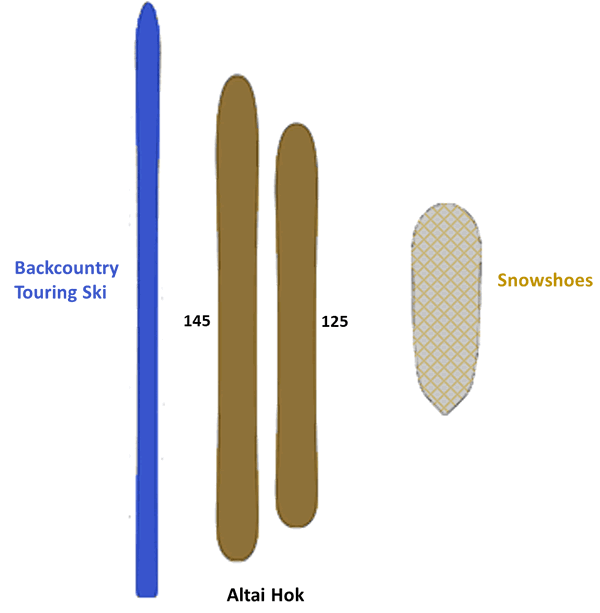
Your footwear system determines whether hiking in deep snow becomes sustainable or suicidal. Snowshoes provide non-negotiable flotation in unconsolidated powder, distributing weight across 200+ square inches to prevent sinking. For waist-deep conditions, select 25″+ models with aggressive crampons—smaller snowshoes (<20″) fail catastrophically when snow density drops below 150 kg/m³. Backcountry skis with climbing skins dominate on packed trails but become anchors in fresh powder, requiring precise technique to avoid exhausting kick-turns on slopes.
Why Gaiters Are Your Critical Defense Line
Waterproof overboots combined with external gaiters form your primary moisture barrier. When snow penetrates your boot, heat loss accelerates 25x—turning minor dampness into dangerous hypothermia within 30 minutes. Seal all seams with waterproof tape and wear synthetic socks that wick moisture even when saturated. Never rely on cotton: it retains 27x more moisture than merino wool, creating a chilling effect that drains energy reserves.
Mastering the Layering Paradox
You’ll simultaneously overheat while surrounded by sub-zero temperatures. Start with a synthetic baselayer that moves moisture away from skin, add a breathable fleece mid-layer for active warmth, and top with a fully waterproof shell. Crucially, unzip your jacket before sweating begins—adjusting every 10-15 minutes prevents moisture buildup that causes rapid cooling during rest stops.
Trailbreaking Techniques That Slash Energy Expenditure
The Kick-Step Method for Steep Slopes
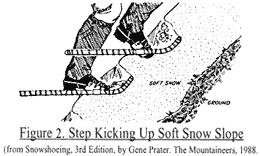
On inclines over 15 degrees, kick the toe of your snowshoe horizontally into the slope to carve a level platform before transferring weight. This prevents sliding and reduces energy use by 30% compared to vertical stomping. For sustained climbs, create a zigzag staircase by packing each step firmly—this builds a stable path for your group and makes the return trip 50% faster.
Pole Planting for Balance and Efficiency
Plant poles shoulder-width apart with baskets sized for snow density (large baskets for powder). Use wrist straps to push down through the strap—not the grip—to engage upper body strength. On descents, plant poles uphill to prevent sliding; on flats, swing poles opposite your legs to maintain rhythm. This technique reduces leg fatigue by distributing workload to your core and arms.
The 45-Second Sustainable Pace Rule
Set a timer for 45 seconds per step when breaking trail. This enforced rhythm prevents sprint-and-collapse cycles that waste energy. Pair steps with deep diaphragmatic breaths: inhale for two steps, exhale for three. Groups should maintain 1-2 foot spacing to share packed snow without crowding. At this pace, expect 1-1.5 mph—half your summer speed.
Avalanche Terrain Navigation: Life-or-Death Route Choices
Reading Aspect to Avoid Hidden Dangers
South-facing slopes develop dangerous crust layers by midday that collapse under weight, while north-facing aspects hold deeper, unstable powder. Wind-loaded leeward slopes accumulate slabs 3-5x deeper than windward sides—immediately avoid convex rolls and gullies where avalanches channel. Never cross slopes above 30 degrees without checking stability: perform a compression test every 30 minutes by digging a snow pit and isolating layers with your shovel.
Essential Gear for Avalanche Zones
If your route approaches 30-degree terrain, carry—and know how to use—a 3-antenna beacon, collapsible probe, and metal shovel. Practice mock rescues monthly: locating a buried beacon takes 8-12 minutes even for experts. Satellite communicators like Garmin inReach are non-negotiable—cell service fails in deep snow terrain where hypothermia sets in within 20 minutes of immobilization.
The Pre-Hike Checklist That Prevents Emergencies

Critical Condition Verification Steps
- Check the avalanche forecast for your specific elevation zone—don’t rely on general region reports
- Test snow stability at trailhead: if your fist sinks past the wrist in unconsolidated snow, postpone
- Pack 50% more calories than summer hikes: 90g/hour of carbs (energy gels + nut butter sandwiches)
- Use insulated water bottles—hydration bladders freeze within 20 minutes in deep snow
Setting Non-Negotiable Turn-Around Times
Calculate your daylight window using winter solstice charts—sunset arrives 2 hours earlier than summer. Set turn-around time when you’ve used 60% of daylight, accounting for 50% slower return speed. If snow depth exceeds waist level by midday, abort immediately: afternoon warming triples post-holing risk.
Deep snow hiking’s brutal paradox—miserable in the moment yet irresistible—stems from conquering a landscape that reshapes your perception of human capability. By respecting unconsolidated snow’s physics, deploying precise flotation systems, and navigating with avalanche-smart route choices, you transform suffering into profound accomplishment. Remember: the difference between an epic adventure and a rescue call hinges on two decisions—wearing proper gaiters and turning back at your pre-set time. Equip for the worst, train for the physics, and the silent world of deep snow will reward you with moments of wilderness purity few ever witness. Your next trek awaits—prepare wisely, and the powder will welcome you back.