

Your kitchen window isn’t just a hole in the wall—it’s the heart of your cooking space, where natural light dances across countertops and the outside world connects with your daily meal prep. Learning how to decorate kitchen window spaces properly transforms this functional element into a design feature that enhances both aesthetics and practicality. Unlike other rooms, kitchen windows face unique challenges: steam from boiling pots, grease particles floating in the air, and frequent splashes near sinks. This guide delivers specific, actionable strategies to decorate your kitchen window with solutions that withstand the realities of daily cooking while elevating your entire kitchen’s appearance.
Most homeowners make the mistake of treating kitchen windows like any other room, only to find their beautiful curtains stained with cooking oil or their wooden blinds warped from humidity. The right kitchen window treatment balances durability with design, offering privacy without blocking precious light, resisting moisture without sacrificing style, and fitting seamlessly into your food preparation workflow. Whether you’re dealing with a tiny apartment kitchen or a spacious farmhouse layout, these proven techniques will help you create a window display that works as hard as you do.
Measure Your Kitchen Window Correctly Before Decorating
Skipping precise measurements is the fastest way to waste money on ill-fitting window treatments that won’t function properly in your kitchen environment. Unlike living room windows, kitchen windows often have obstructions like upper cabinets, lighting fixtures, or appliances that affect how treatments hang and operate.
Determine the Ideal Mounting Position for Kitchen Windows
Inside mounts create a clean, built-in look but require at least 2-3 inches of window frame depth to avoid interfering with operation—critical for windows above sinks where clearance matters. Outside mounts provide better light blockage and work well when your window frame is shallow, but they eat into your visible glass area, which reduces natural light in already compact kitchen spaces.
Pro Tip: For windows above kitchen sinks, measure from the top of your upper cabinets to the bottom of the window frame. This ensures your treatment won’t interfere with dishwashing while maintaining a cohesive look with your cabinetry.
Account for Kitchen-Specific Obstructions
Kitchen windows often sit between upper cabinets or next to range hoods, creating unique installation challenges. Measure the distance between cabinets and the window to ensure your curtain rod or blind valance fits without crowding your workspace. If your window has a protruding faucet, add 1-2 inches to your width measurement to prevent the treatment from hitting fixtures during operation.
Select Kitchen-Proof Window Treatments That Resist Grease and Humidity
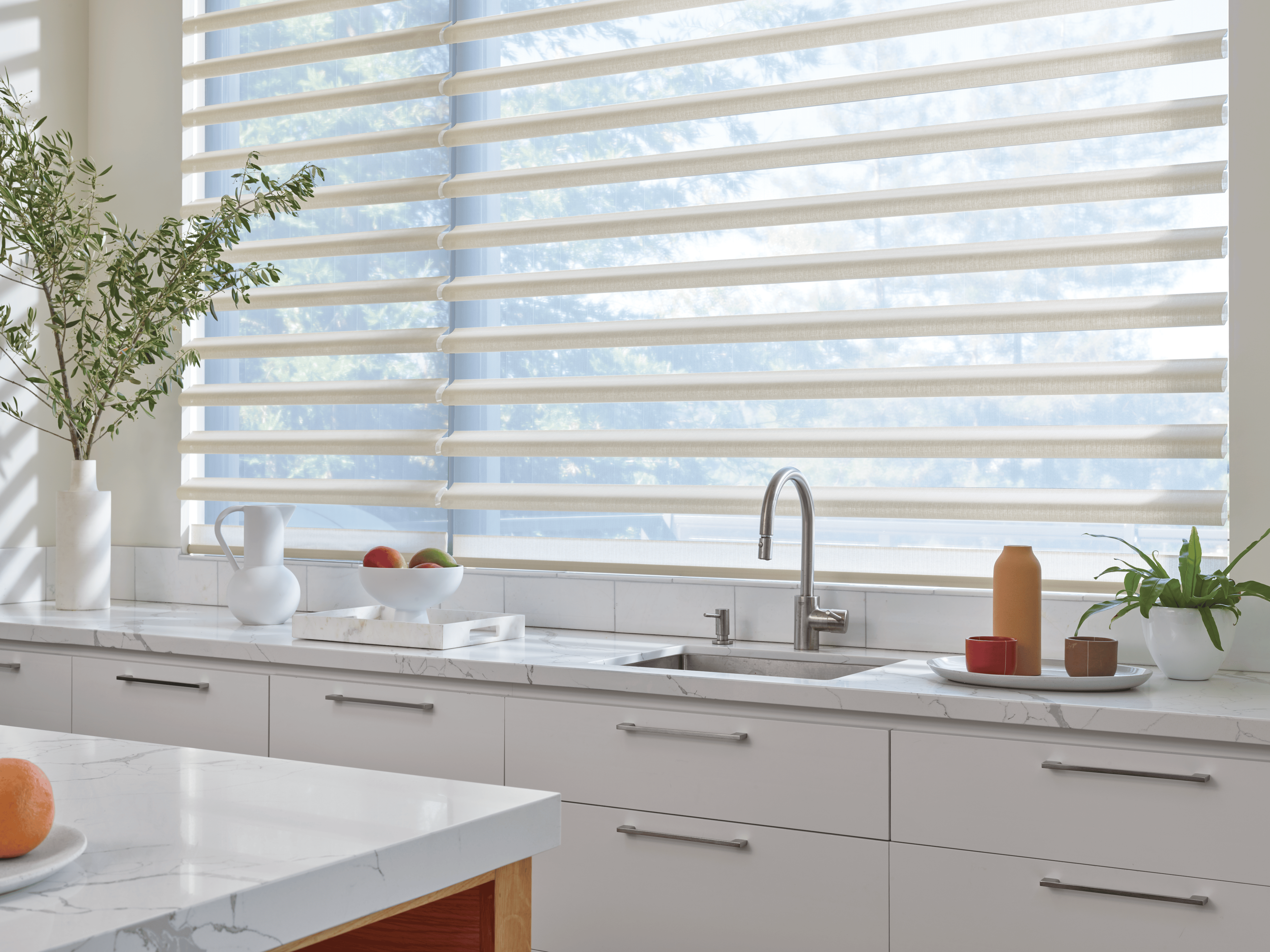
Not all window coverings can survive the kitchen’s harsh environment. The right choice withstands cooking vapors, resists grease buildup, and wipes clean with minimal effort—essential qualities most living room treatments lack.
Top 3 Durable Materials for Kitchen Windows
Faux Wood Blinds: Unlike real wood that swells and warps in steamy kitchens, high-quality faux wood blinds resist moisture, won’t fade from sunlight, and clean with a damp cloth. They’re ideal for windows above sinks where splashes occur daily.
Moisture-Resistant Roller Shades: Look for polyester or vinyl composite fabrics specifically labeled “kitchen-safe” with a wipe-clean finish. Cellular shades with a moisture-resistant coating provide insulation while repelling kitchen humidity.
Washable Roman Shades: Choose performance fabrics with stain resistance that can be machine-washed monthly—a lifesaver for windows near stovetops where grease splatters accumulate.
Avoid These Common Kitchen Window Treatment Mistakes
Never install fabric curtains directly above your stove—they’re a fire hazard and will quickly absorb cooking odors and grease. Similarly, steer clear of corded treatments near sinks where dangling cords could get wet and create electrical hazards. Heavy velvet drapes might look luxurious elsewhere but will trap kitchen odors and require professional cleaning you won’t want to undertake monthly.
Install Cordless Safety Solutions for Kitchen Windows with Kids and Pets
Kitchens are high-traffic zones where children and pets frequently move around, making traditional corded window treatments dangerous. Modern cordless options eliminate strangulation risks while providing smoother operation in busy kitchen environments.
How to Choose Safe Kitchen Window Treatments
Motorized Roller Shades: Control with wall switches or smartphone apps, keeping cords completely out of reach. Perfect for hard-to-reach kitchen windows above refrigerators or islands.
Spring-Loaded Roman Shades: Lift with a gentle tug for precise height control, then lower smoothly without cords. Look for models with child-safe locking mechanisms that prevent accidental full drops.
Top-Down/Bottom-Up Cellular Shades: Adjust privacy independently from light control—lower the top for ventilation while maintaining privacy below, ideal for windows above kitchen sinks where you want light but not visibility.
Maximize Small Kitchen Windows with Space-Saving Hacks
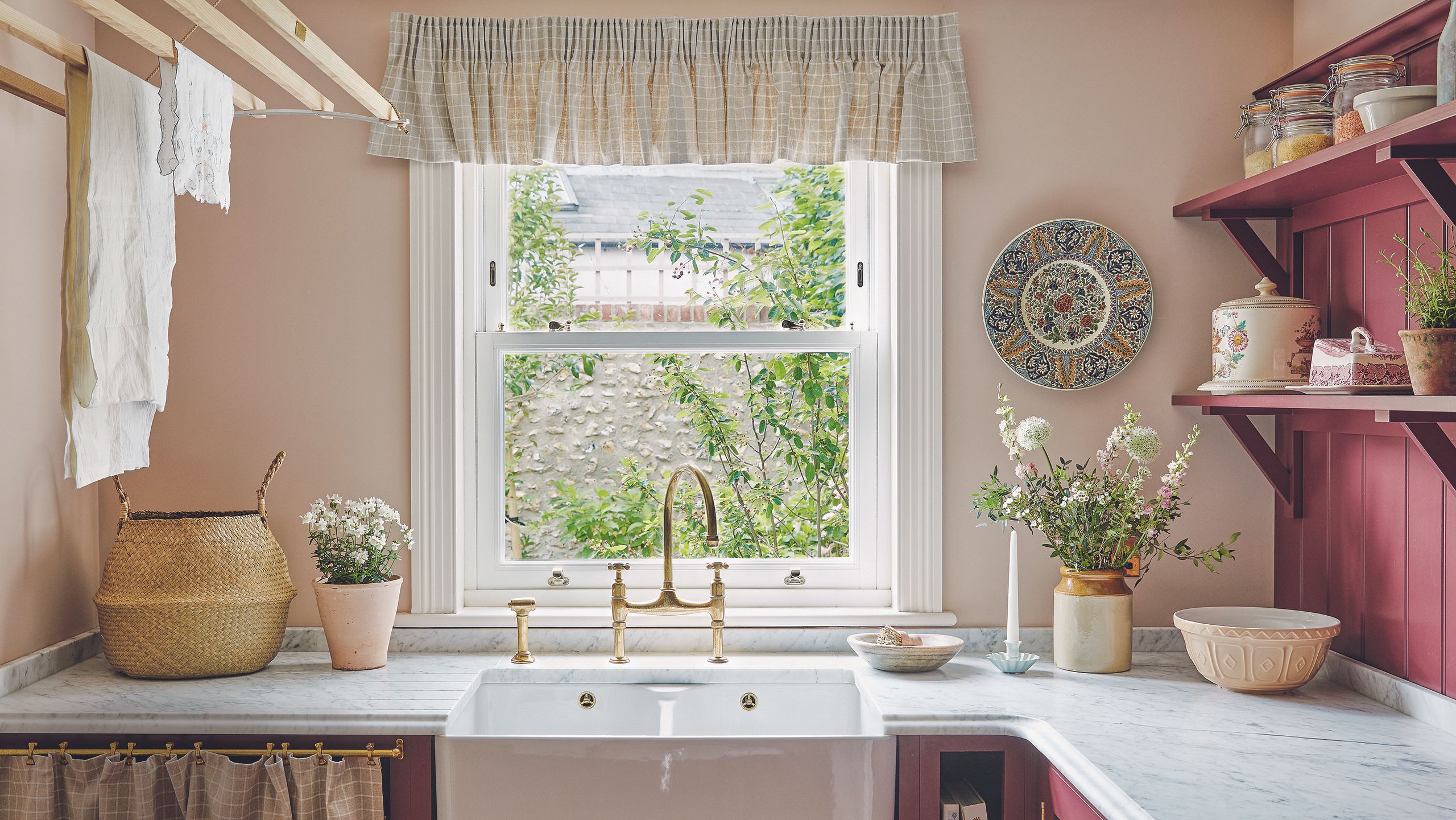
Tiny kitchens demand clever solutions that make windows appear larger while preserving every inch of precious counter space. The right treatment creates the illusion of space without sacrificing function in cramped cooking areas.
Three Space-Boosting Techniques for Compact Kitchens
Mount Hardware Above Cabinets: Install curtain rods or blind brackets 4-6 inches above upper cabinets to draw the eye upward, making ceilings appear higher and windows look larger—a game-changer for galley kitchens under 10 feet wide.
Choose Inside-Mount Treatments: For windows between cabinets, inside-mounted roller shades disappear completely when raised, maximizing visible glass area without protruding into your workspace.
Use Reflective Backing: Install honeycomb shades with reflective backing to bounce natural light deeper into your kitchen, reducing the need for artificial lighting during daytime cooking.
Layer Window Treatments for Kitchen Windows Like a Design Pro

Single-layer treatments rarely solve all kitchen window challenges. Strategic layering combines functionality with visual interest while addressing multiple needs simultaneously—something most homeowners overlook when learning how to decorate kitchen window spaces.
Create Functional Layers That Work in Kitchens
Sheer + Roller Combo: Install a sheer roller shade closest to the glass for daytime privacy, then add a decorative valance above for style. This combination lets you adjust light without changing the room’s aesthetic.
Cafe Curtains with Under-Mount Blinds: Pair short upper curtains with moisture-resistant mini-blinds mounted below—perfect for windows above kitchen sinks where you want privacy from the waist down while maintaining views outward.
Motorized + Manual Pairing: Use motorized cellular shades for primary light control, then add removable clip-on valances for seasonal decor changes without replacing the entire treatment.
Maintain Your Kitchen Window Decorations with Minimal Effort
Kitchen window treatments require more frequent cleaning than other rooms due to cooking vapors and grease. The right maintenance routine keeps them looking fresh with minimal effort—critical for busy homeowners who don’t have time for intensive cleaning.
Weekly Kitchen Window Treatment Care Routine
Monday Dusting: Use a microfiber duster on blinds and shutters while making your morning coffee—takes less than 2 minutes and prevents buildup.
Friday Wipe-Down: Mix 1 cup water with 1 tablespoon white vinegar in a spray bottle. Lightly mist roller shades or faux wood blinds, then wipe with a microfiber cloth to remove cooking residue.
Monthly Deep Clean: For fabric Roman shades, remove according to manufacturer instructions and launder on gentle cycle with mild detergent. Air dry completely before reinstalling to prevent mold growth in humid kitchens.
Transform Budget Decorations into High-End Kitchen Window Features
You don’t need custom treatments to achieve designer results. Smart styling tricks elevate affordable options into cohesive kitchen design elements that look intentional rather than afterthoughts.
Three Budget Hacks That Look Expensive
Paint Matching Blinds: Spray-paint inexpensive faux wood blinds to match your kitchen cabinets—use matte finish spray paint for seamless integration that costs under $15.
DIY Fabric Inserts: Cut moisture-resistant outdoor fabric into panels that fit inside ready-made bamboo shades. This custom look costs 70% less than custom Roman shades while providing wipe-clean functionality.
Strategic Hardware Upgrades: Replace basic curtain rod finials with $3-5 decorative ends that match your faucet or cabinet hardware—this tiny detail creates expensive cohesion throughout your kitchen.
When to Call a Professional for Kitchen Window Decor Projects
Some kitchen window situations demand expert help to balance aesthetics, functionality, and safety. Knowing when to invest in professional services prevents costly mistakes in high-usage kitchen spaces.
Four Scenarios Requiring Professional Help
Complex Bay Windows: Multi-pane kitchen bays need custom-fitted treatments that operate independently—professionals ensure precise measurements so shades don’t interfere with window operation during meal prep.
Motorization for High Windows: Windows above refrigerators or tall cabinets require professional installation of motorized systems to ensure safe, reliable operation without straining to reach cords.
Historic Kitchen Preservation: Older homes with unique window configurations need specialists who understand period-appropriate treatments that meet modern safety standards while maintaining architectural integrity.
Energy Efficiency Upgrades: Professionals can install insulating cellular shades with proper sealing to reduce kitchen heating costs by up to 25%—a precise installation that DIYers often get wrong.
Your kitchen window deserves decoration that works as hard as you do—resisting grease splatters while enhancing your space’s beauty. By choosing moisture-resistant materials, prioritizing safety with cordless options, and implementing smart layering techniques, you’ll create a window treatment that looks intentional rather than an afterthought. Remember to measure carefully around kitchen obstructions, commit to a simple weekly cleaning routine, and don’t hesitate to call professionals for complex installations where precision matters. The perfect kitchen window decoration balances form and function so seamlessly you’ll wonder how you ever cooked without it. Start with one small change today—like switching to wipe-clean roller shades above your sink—and watch how this focal point transforms your entire kitchen experience.


