
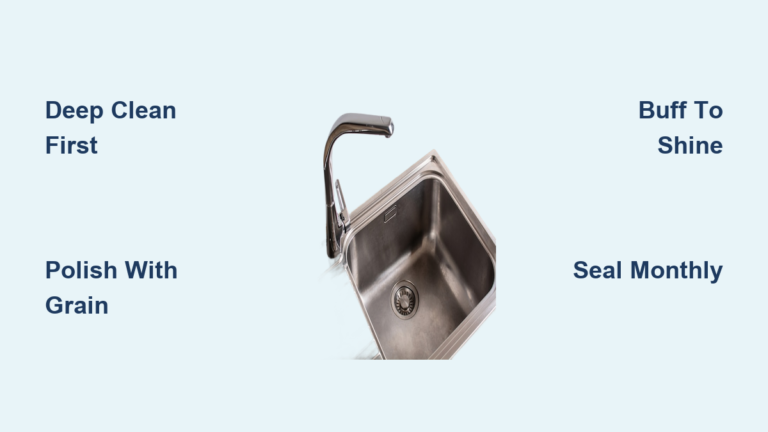
Your stainless steel kitchen sink shouldn’t look dull or streaked after just a few months of use. Water spots, soap scum, and mineral deposits turn what should be a gleaming focal point into a frustrating eyesore. A properly polished sink not only elevates your kitchen’s appearance but actively repels fingerprints and prevents corrosion. The good news? You don’t need expensive tools or professional help. By following this precise method tailored to your sink’s finish, you’ll achieve a showroom-quality shine within 30 minutes—without risking scratches or chemical damage.
Most homeowners make critical mistakes during polishing that actually accelerate wear, like using abrasive pads or polishing against the grain. This guide cuts through the confusion with step-by-step instructions verified by stainless steel manufacturers. You’ll learn exactly how to prep your sink, select the right polish for brushed or mirror finishes, and apply it using directional techniques that hide existing scratches. Plus, we’ll reveal the protective seal trick that keeps your sink spotless between deep cleans.
Why Your Stainless Steel Sink Loses Its Shine Daily
Hard water minerals and acidic residues silently degrade your sink’s finish every time you wash dishes. Unlike copper or porcelain, stainless steel develops microscopic scratches from improper cleaning that trap grime and create a cloudy appearance. Chlorine in tap water reacts with iron particles in the steel, causing faint rust spots that spread if untreated. Even seemingly harmless habits like leaving a wet sponge in the sink overnight accelerate corrosion around the drain. The key isn’t just cleaning—it’s restoring the protective oxide layer through proper polishing.
Must-Have Supplies for Scratch-Free Sink Polishing
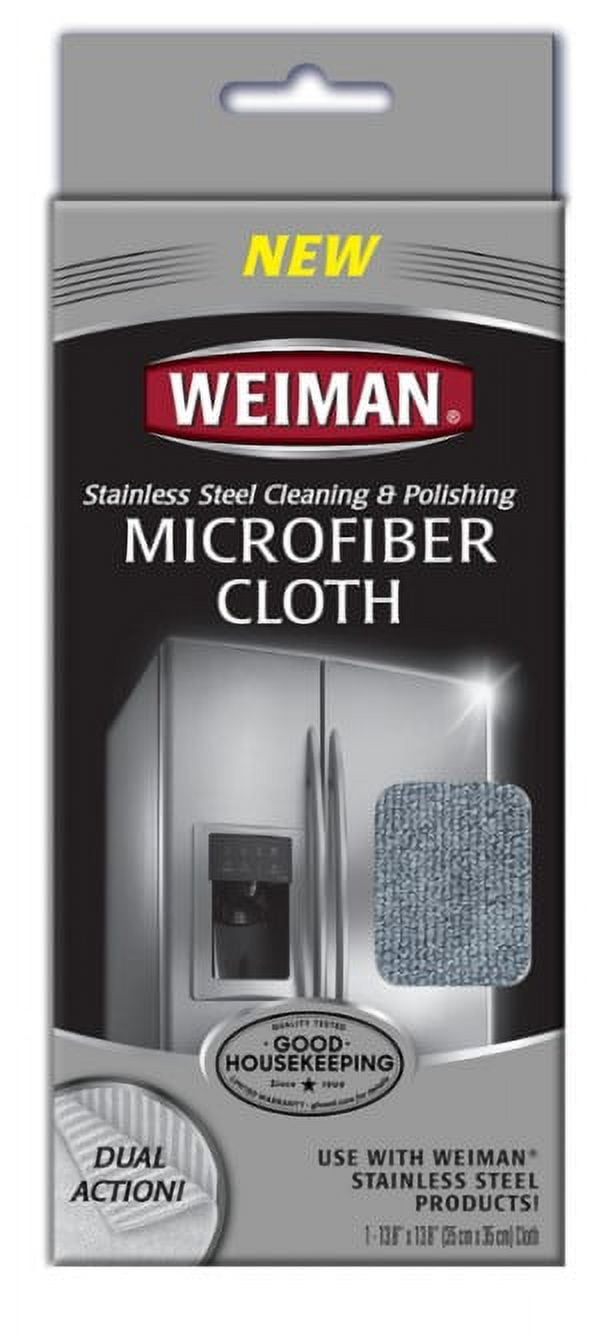
Gather these specific items before starting to avoid accidental damage:
– Non-abrasive cleaners: Mild dish soap or dedicated stainless steel polish (Weiman/Bar Keepers Friend)
– Grain-friendly tools: 3+ microfiber cloths (lint-free), soft sponge, non-abrasive Dobie pad
– Stain fighters: White vinegar (for mineral deposits), baking soda paste (for rust)
– Protective seal: Food-grade mineral oil or baby oil (NOT olive oil—it turns rancid)
Critical safety step: Test commercial polishes on the sink’s underside first. Wear rubber gloves and ensure kitchen ventilation—especially when using vinegar solutions that can irritate eyes.
Deep Cleaning: Removing Stubborn Stains Before Polishing
Eliminating Hard Water Spots and Limescale
Soak paper towels in undiluted white vinegar and press them onto affected areas around the faucet. Let sit for 15 minutes to dissolve mineral buildup, then wipe with straight strokes following the grain. For sink basins, fill with equal parts vinegar and hot water, soak for 10 minutes, then scrub gently with a baking soda paste using a soft cloth. Never mix vinegar with bleach—this creates toxic chlorine gas.
Tackling Rust and Food Stains
Make a thick paste of baking soda and water. Apply directly to rust spots near the drain, let sit 8 minutes, then rub only with the grain using a microfiber cloth. For tomato sauce or coffee stains, use a non-gel toothpaste (its ultra-fine abrasives lift discoloration without scratching). Always rinse thoroughly with hot water after stain treatment.
Perfect Drying Technique for Flawless Polish Adhesion
Moisture is polish’s worst enemy. After rinsing, immediately dry the entire sink with a clean microfiber cloth, paying special attention to crevices around the drain and faucet base. Fold the cloth frequently to use dry sections—damp fibers leave water spots that block polish penetration. The surface must feel completely smooth and cool to the touch before proceeding. If you see hazy patches, re-rinse and dry again; residual vinegar or soap will cause polish to bead unevenly.
Brushed Finish Polishing: Hiding Scratches Like a Pro
Applying Polish with the Grain
Brushed stainless (90% of kitchen sinks) has visible linear patterns. Apply polish in 1-foot sections using straight, overlapping strokes parallel to these lines. Dip your cloth in polish, then wipe downward from the rim toward the drain—never side-to-side or circular motions. Use light pressure; excessive force grinds polish into existing scratches. Work section by section to prevent drying.
Buffing to Reveal the Shine
After applying polish to a section, switch to a dry microfiber cloth and buff vigorously with the grain for 60 seconds. The friction generates heat that activates the polish’s protective compounds. You’ll see the surface transform from hazy to reflective. For stubborn cloudiness, reapply polish but reduce pressure—over-polishing thins the metal over time.
Mirror Finish Polishing: Achieving True Reflective Shine
Special Techniques for High-Gloss Sinks
Mirror-finish sinks require extra caution. Use only liquid stainless steel polish (not baking soda) applied with a feather-light touch. Wipe in slow, expanding circular motions starting from the center outward—this minimizes visible swirl marks. Buff with a clean microfiber cloth using rapid, small circles until fingerprints disappear. Pro tip: Polish at a slight angle under bright light to spot missed areas.
Fixing Common Damage: Scratches and Water Spots
Removing Light Scratches in 5 Minutes
For hairline scratches, apply non-whitening toothpaste to a microfiber cloth. Rub only along the scratch’s direction using minimal pressure. Rinse after 2 minutes. Deep scratches need professional attention—DIY methods often worsen them.
Preventing Water Spots Before They Form
After polishing, spray a 50/50 vinegar-water mix on the sink, then immediately wipe dry with the grain. This neutralizes mineral residues. For lasting protection, apply 3 drops of mineral oil to a cloth and buff into the surface—it creates an invisible barrier against spotting.
Applying Protective Seal: The Restaurant-Style Secret

Post-polish sealing cuts future cleaning time by 70%. Dip a microfiber cloth in food-grade mineral oil, then apply a micro-thin layer over the entire sink using straight strokes. Buff immediately with a dry cloth until no oil residue remains. Test by splashing water—it should sheet off cleanly without beading. Reapply monthly for maximum fingerprint resistance.
Daily Maintenance That Prevents Shine Loss
Skip these simple steps and your polish job won’t last a week:
– After every use: Wipe sink dry with microfiber cloth (no air-drying)
– Weekly: Clean with vinegar-water spray, then dry thoroughly
– Monthly: Reapply mineral oil seal to high-traffic areas near the faucet
– Never leave: Wet sponges, cast iron pans, or acidic foods (tomatoes, citrus) sitting in the sink
4 Costly Mistakes That Ruin Stainless Steel Sinks
Why Steel Wool and Bleach Are Dealbreakers
Steel wool pads leave embedded iron particles that rust permanently into the surface. Bleach causes pitting corrosion within hours—it’s the #1 reason for premature sink replacement. Even “gentle” abrasive powders like Comet scratch the finish under magnification. Always verify product labels: if it says “not for stainless steel,” believe it.
The Grain Direction Disaster
Polishing across the grain (perpendicular to brushed lines) creates visible cross-hatching that traps dirt. Fix this by re-polishing the entire sink with the grain—it can’t be spot-corrected. When in doubt, run your fingernail lightly across the surface; the direction with less resistance is the grain.
How Often to Polish Your Kitchen Sink for Lasting Results
Over-polishing wears down protective coatings. Follow this schedule based on usage:
– Light use (1-2 people): Polish every 6 months
– Heavy use (family of 4+): Polish every 3 months
– Emergency polish: Immediately after bleach exposure or visible rust spots
– Quick refresh: Between polishes, use vinegar spray + mineral oil seal weekly
When to Call a Professional for Sink Restoration
DIY polishing fails for deep pitting, widespread rust, or damaged protective coatings. If your sink shows any of these, stop immediately:
– Orange/brown discoloration that won’t lift with baking soda
– Dents or gouges deeper than 0.5mm
– “Peeling” appearance near the rim (coating failure)
Professionals use 3M polishing discs that can’t be replicated at home—attempting repairs risks permanent damage.
Final Note: A brilliantly polished sink transforms your kitchen from functional to flawless, but the real victory is in maintenance. By drying after each use and sealing monthly, you’ll avoid the frustration of constant re-polishing. Start with the vinegar pre-clean today, and within 20 minutes, you’ll have a sink that reflects your effort—literally. For stubborn hard water stains, revisit the vinegar soak method monthly; it’s the single most effective prevention step pros swear by. Your gleaming sink isn’t just clean—it’s protected.


