
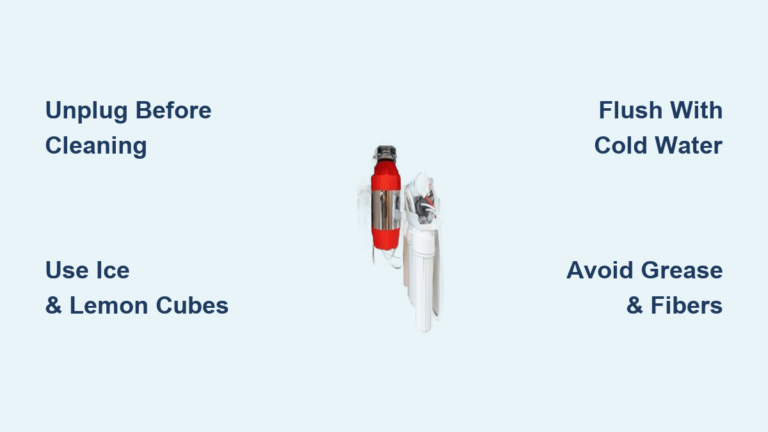
That rotten-egg stench creeping up from your sink every time you run the faucet? It’s your garbage disposal begging for help. When food debris and grease accumulate inside the unit, they create a bacterial breeding ground that causes foul odors, slow drainage, and frequent jams. How to clean kitchen garbage disposal properly isn’t complicated—but skipping it guarantees plumbing disasters. Most homeowners accidentally worsen problems by using bleach or hot water, creating dangerous fumes or pipe-clogging grease. This guide delivers safe, manufacturer-approved techniques to restore freshness in minutes, troubleshoot humming motors, and prevent costly repairs. You’ll learn exactly which methods actually work (and which “hacks” destroy your unit).
Ignoring regular disposal maintenance leads to expensive plumber visits and ruined kitchen ambiance. Yet with just 5 minutes weekly, you can keep your disposal running smoothly for years. We’ll focus on proven strategies from InSinkerator engineers and plumbing experts—no dangerous chemical mixes or damaging “blade-sharpening” myths. By the end, you’ll have a step-by-step action plan to eliminate odors permanently and extend your disposal’s lifespan.
Critical Safety Steps Before Touching Your Disposal

Never skip power disconnection—this causes 95% of disposal injuries. Before any cleaning attempt, unplug the unit from under the sink OR flip its dedicated circuit breaker to OFF. Verify power is cut by testing the wall switch. This isn’t optional: disposals react instantly to accidental switch bumps, and their impellers can crush fingers in milliseconds. Never insert hands, tools, or utensils while the unit is plugged in, even if it appears off.
Why Chemical Mixing Creates Deadly Gases
Bleach combined with vinegar or lemon juice produces toxic chlorine gas that can cause lung damage in seconds. Similarly, bleach mixed with ammonia (in some cleaners) creates chloramine gas—both are hospitalization risks. Always use one cleaning method per session and flush thoroughly with cold water between attempts. If you’ve used chemical drain cleaners recently, wait 24 hours before trying vinegar or citrus methods. When in doubt, stick to ice cubes and dish soap—zero chemical risk.
Essential Gear for Safe Cleaning
Keep these items within reach: chemical-resistant gloves, safety goggles, a flashlight for inspecting the chamber, and long-handled tongs (never use fingers). For manual scrubbing, an old toothbrush or bottle brush works better than sponges that shred. Always work in a well-ventilated kitchen—open windows or turn on exhaust fans before starting. If you smell gas during cleaning, evacuate immediately and call a professional.
Weekly Lemon Ice Cube Refresh for Odor-Free Disposal
This 3-minute method eliminates 90% of odors using items you already own. Unlike chemical cleaners, it physically scrubs gunk while deodorizing—no toxic fumes. Perform this every 7-10 days to prevent smell buildup. Do not skip the ice: frozen vinegar cubes act as miniature scouring pads against the grind ring.
How to Make Freezer-Friendly Citrus Ice Cubes
Fill an ice tray with a 2:1 mix of water and white vinegar, adding thin lemon or orange peel strips to each cube. Freeze overnight. When ready, turn on cold water at medium flow, drop 3-4 cubes into the disposal, and run for 30 seconds. The ice scrapes residue while citrus oils neutralize bacteria. For stubborn smells, add 5 drops of lemon essential oil to the vinegar mixture before freezing.
What to Do When Lemon Ice Doesn’t Eliminate Odors
If smells persist after two sessions, gunk is trapped under the rubber splash guard. Perform a manual scrub (see Section 5) immediately. Never double the cubes—excess ice can jam the motor. Instead, follow with a dish soap flush (next section) to dissolve grease holding odor-causing bacteria. If the stench returns within days, check for leaks under the sink that allow sewage gases to escape.
Quick Dish Soap Flush to Remove Grease Buildup
Grease is the #1 cause of slow-draining disposals—it coats pipes like concrete when cooled. This 45-second technique dissolves grease safely using Dawn or similar degreasing dish soap. Do this weekly after heavy cooking days (like Thanksgiving) or whenever drainage slows. Cold water is non-negotiable: hot water melts grease, letting it travel downstream where it solidifies into clogs.
Why Dawn Dish Soap Works Best for Grease
Dawn’s formula contains sodium laureth sulfate that emulsifies fats, turning them into washable particles. Generic soaps lack this potency. Squeeze a quarter-sized dollop (not a squirt) directly into the drain. Turn on cold water, run the disposal for 30 seconds, then flush with water for 30 more seconds. You’ll hear the motor sound smoother as grease clears.
Avoid This Common Dish Soap Mistake
Never use bar soap or laundry detergent—they create excessive suds that overflow the sink. Also, don’t run the disposal dry; cold water must flow continuously to carry grease out. If you see foam bubbling up, stop immediately and flush with extra water. For severe grease buildup, repeat this method twice weekly until drainage improves.
Baking Soda and Vinegar Deep Clean (With Safety Warnings)
This fizzy reaction dislodges minor clogs by creating CO2 bubbles that lift gunk from surfaces—but it won’t dissolve major blockages. Use it monthly for maintenance, never as a clog solution. Crucially, never use this if you’ve applied bleach recently; the vinegar/bleach mix creates chlorine gas. Always wear gloves and eye protection.
Why the Fizzing Reaction Actually Helps
The bubbling action physically lifts food particles from the grind chamber walls. Pour ½ cup baking soda directly into the drain, followed by 1 cup white vinegar. Let it foam for 5-10 minutes (don’t exceed 15—it loses effectiveness). Then flush with boiling water to melt residual grease. This isn’t magic chemistry; it’s mechanical agitation from the bubbles.
When NOT to Use Vinegar on Your Disposal
Skip this method if your disposal leaks or makes grinding noises—vinegar can corrode metal components over time. Also, never use it on InSinkerator models; their manufacturer recommends baking soda paste only (see below). If your unit smells metallic after vinegar use, rinse thoroughly with cold water and switch to lemon ice cubes exclusively.
How to Manually Scrub Your Garbage Disposal’s Splash Guard
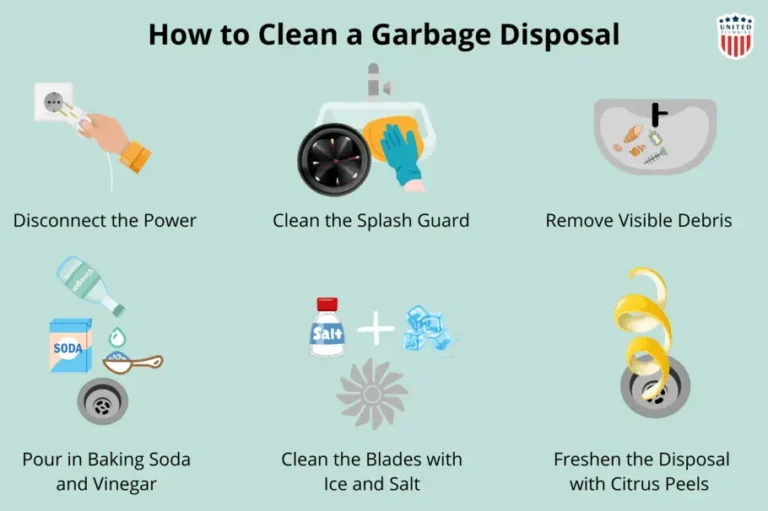
The rubber baffle traps 70% of odor-causing gunk but is often ignored. This 10-minute scrub eliminates persistent smells when ice cubes fail. Power must be OFF at the circuit breaker—not just the wall switch. One accidental activation could cause severe injury.
Step 1: Power Down Your Disposal (Non-Negotiable!)
Locate the disposal’s circuit breaker (usually labeled “disposal” or “kitchen”). Flip it to OFF and tape it in place to prevent accidents. Test by pressing the wall switch—no hum means it’s safe. If your unit has a plug under the sink, unplug it too. Never rely solely on the switch.
Step 2: Scrubbing Techniques That Reach Hidden Gunk
Shine a flashlight into the drain. Use a bottle brush or toothbrush dipped in baking soda paste (3 parts soda, 1 part water) to scrub the rubber splash guard’s underside and upper chamber walls. Focus on the “collar” area where the baffle meets the metal housing—this is bacteria central. Rinse with warm soapy water, then run the lemon ice method to freshen.
Step-by-Step: Unjamming Your Garbage Disposal Without Tools
A humming motor means impellers are jammed but the motor works—a fixable issue 95% of the time. Never use hands or metal tools; tongs or a wooden spoon handle are safer. This method works for 90% of jams (like fruit pits or chicken bones).
Locating and Resetting the Red Button Under the Sink
Find the small red reset button on the disposal’s bottom. Press it firmly until it clicks. If it pops back out immediately, a physical jam remains. Turn off power, then use tongs to remove visible debris. If nothing’s visible, proceed to manual rotation.
Using a Wooden Spoon to Free Stuck Impellers
Insert a wooden spoon handle vertically into the drain. Rotate it clockwise and counterclockwise 5 times—it should move the impellers. Then press the reset button again, restore power, and run cold water while testing. If it hums again, repeat the spoon rotation. Never use metal objects—they can scratch components.
Stop Leaks from Your Garbage Disposal Unit Immediately

Water pooling under the sink usually means a loose connection—not a dead disposal. Tightening it takes 5 minutes and prevents water damage. Never ignore leaks; they cause mold and cabinet rot within weeks.
Tightening the Sink Flange Without Causing Damage
Place a broom handle through the sink opening to immobilize the disposal. Under the sink, locate the 3-pronged mounting assembly. Use a screwdriver to snug each mounting tab (don’t overtighten—you’ll crack the flange). If leaks persist, replace the fiber gasket between the sink and disposal.
When a Leaky Disposal Means Replacement Time
If water drips from the bottom of the unit, the internal seal is blown—repair isn’t cost-effective. Units over 8 years old with bottom leaks should be replaced. For side leaks at pipe connections, tighten slip-nut clamps with pliers. If leaks continue after tightening, replace the rubber gaskets.
5 Daily Habits to Prevent Garbage Disposal Problems
Prevention beats cleanup every time. These habits take zero extra effort but extend disposal life by 5+ years. Cold water is the golden rule—hot water melts grease, guaranteeing future clogs.
Cold Water vs. Hot Water: The Critical Difference
Always run cold water for 30 seconds BEFORE, DURING, and AFTER grinding. Cold water solidifies fats so impellers can chop them; hot water lets grease flow downstream where it hardens into clogs. This single habit prevents 80% of disposal failures. Never skip the post-grind flush—it clears residual particles.
Foods That Destroy Your Disposal (Avoid These!)
Ban these items permanently:
– Fibrous veggies (celery, corn husks)—they wrap around impellers
– Eggshells—create sand-like paste that clogs pipes
– Grease/oil—solidifies into pipe-blocking sludge
– Pasta/rice—expands in pipes, causing blockages
Run citrus peels weekly to deodorize, but avoid thick grapefruit rinds that strain motors.
Your garbage disposal stays fresh and functional with minimal effort—just consistent, correct habits. Stick to the lemon ice cube refresh weekly, use cold water religiously, and never grind forbidden foods. If odors return despite cleaning, check for hidden leaks or consider professional inspection. For ongoing maintenance, bookmark this guide and repeat the dish soap flush after heavy cooking days. A well-cared-for disposal lasts 10+ years, saving you $200+ in repairs. Start today: make those vinegar ice cubes tonight and wake up to a fresh-smelling kitchen tomorrow.


